

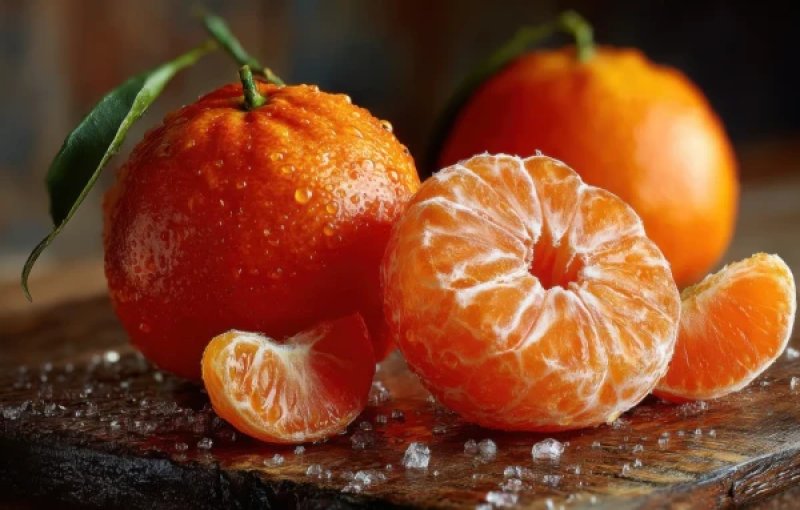
Oranges and clementines belong to the same citrus family, but their nutritional value differs. According to specialized nutrition resources, an average orange weighing about 140 grams contains approximately **80–90 mg of vitamin C**, which covers almost the daily requirement for an adult. A smaller clementine, weighing about 70–75 grams, provides an average of **35–40 mg of vitamin C**, which is about 40–60% of the daily norm. Thus, when comparing one fruit, an orange provides more vitamin C. However, when consuming two to three clementines, the total amount of vitamin C can be comparable. As for sugar, the differences between the fruits are not as noticeable. In terms of 100 grams of pulp, both oranges and clementines contain approximately **9–10 grams of natural sugars**. The figures can vary depending on the variety and ripeness of the fruits, so it is incorrect to refer to clementines as a "sugar trap." Both citrus fruits are also rich in fiber, potassium, folates, and antioxidants. Clementines are often perceived as sweeter and more convenient for snacking — they are easier to peel and contain virtually no seeds. Oranges, on the other hand, win in terms of size and a more pronounced tartness. **Oranges and clementines are healthy and nutritious fruits**, each with its own advantages. An orange is suitable for those who want to get the maximum amount of vitamin C from one fruit, while a clementine is ideal for those who appreciate sweetness and convenience. In any case, both options fit well into a balanced winter diet.