

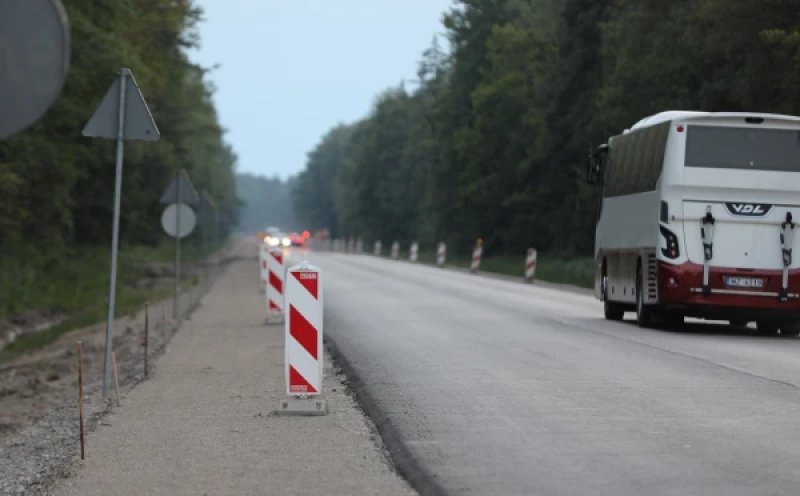
Primarily, these may be projects for updating the road surface, where the share of bitumen is the highest; however, Akimov did not rule out that this year LVC may also abandon some projects for the reconstruction of regional roads, such as the reconstruction of the Vilany–Preili–Spogi road. In other places, LVC may replace the planned reconstruction with road surface updates. Postponed projects may be moved to next year, noted Akimov. He added that prices have risen not only for bitumen, which is influenced by rising oil prices. For example, over the year, prices for sand, gravel, crushed stone, and other materials have also increased by 25%. Akimov also pointed out the insufficient funding for the construction of highways: for instance, 153 million euros have been allocated for capital investments this year, whereas 407 million euros would be necessary. For the current maintenance of roads, 57 million euros have been allocated, while 173 million euros are required. Akimov emphasized that construction projects for many regional roads have already been prepared, but funding for their reconstruction is not provided. "It is clear that the development of state highways cannot be achieved solely through state budget funds. External funding is also necessary; therefore, funds for the reconstruction of roads must be included in the next programming period of the European Union's structural funds," said Akimov. The company LVC was established in late 2004 and is state-owned. The enterprise manages a network of state highways, administers the financing of this network, and organizes procurement for state needs. LVC manages more than 20,000 kilometers of state highways.