

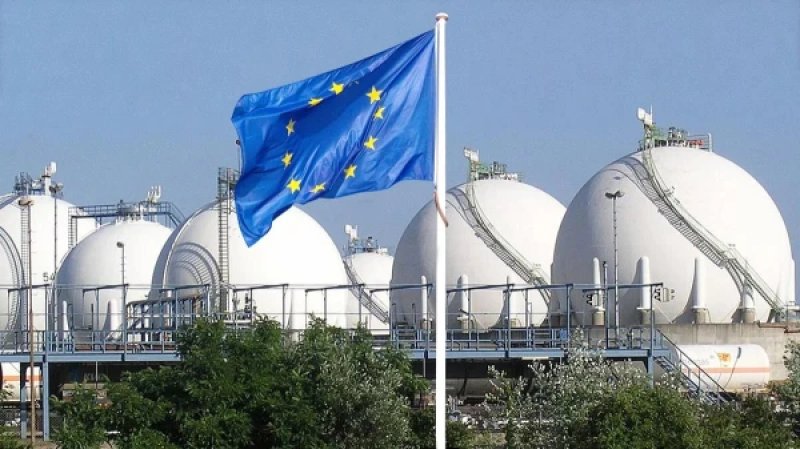
European countries are faced with the necessity to urgently replenish their gas reserves, driven by the tense situation in the Strait of Hormuz. The injection of fuel into underground storage facilities (UGS) has begun at significantly lower filling levels than in previous years. This process is complicated by the ongoing crisis that affects global supplies. These conclusions follow from fresh data published by the European Association of Gas Infrastructure Operators (GIE). Since mid-April, European underground gas storage facilities have entered an active net injection mode, with approximately 0.15 billion cubic meters being injected daily more than is consumed. However, some countries, such as Bulgaria, the Czech Republic, Denmark, and Poland, have not yet started replenishing their reserves. For example, Poland shows a storage filling level of 44%, which exceeds the average levels in the European Union and allows it to proceed with caution regarding injection. Thanks to record imports of liquefied natural gas (LNG) in March, amounting to about 13.7 billion cubic meters, the filling of UGS in the EU increased by nearly 3 percentage points compared to the end-March low. However, the overall rate of replenishment remains below that of previous years. This is explained by the acute shortage of available gas in the global market, creating additional difficulties for European consumers. The tense situation in the Middle East, along with shipping restrictions in the strategically important Strait of Hormuz, has led to a significant reduction in LNG supply. As a result, the available volumes of gas are primarily directed towards current consumption rather than storage replenishment. At the same time, there is increasing competition for LNG with Asian countries, where gas prices have already surpassed European levels. This is prompting a redirection of a significant portion of supplies to the Asia-Pacific region (APR). In the event that the blockade of the Strait of Hormuz drags on for 3–4 months, experts predict the development of an extreme scenario. In such a case, gas prices could soar to $900 per thousand cubic meters. To ensure the attraction of additional volumes of liquefied natural gas during the summer period, market prices must remain in the range of $500 to $700.