

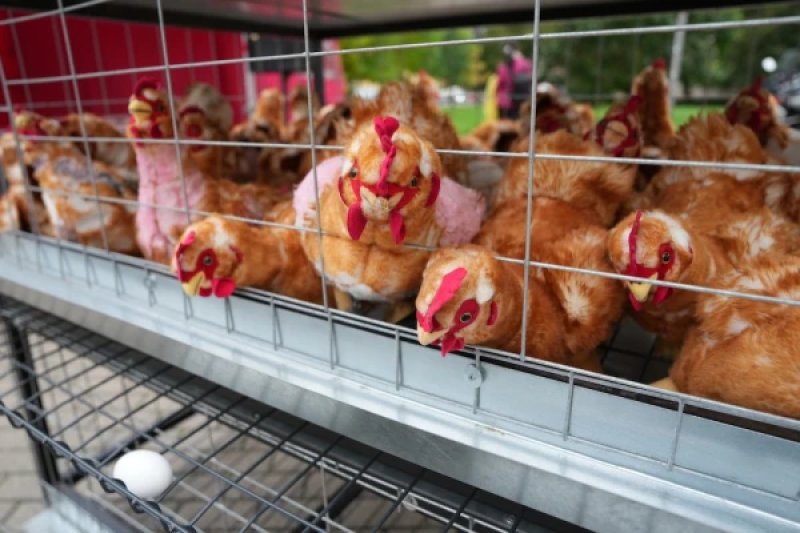
Participants of the rally came with posters and banners featuring images of animals, as well as slogans such as "Freedom for hens!", "Cages for hens — in the past!", "This is wrong!" and "Please help me!" Some posters displayed hearts with animal silhouettes, emphasizing the message of the rally about animal welfare and rights. During the rally, participants used a megaphone to address passersby and lawmakers, urging legislators to adopt stricter measures in animal protection and "promote a transition to more humane agricultural practices." Representatives of the State Police were also present at the scene, monitoring public order. As reported by the LETA agency, the ban on caging laying hens with a transition period until 2030 in Latvia will not significantly affect egg prices, consumption, and tax revenues, impacting only a small part of the industry, according to an economic analysis of the ban's impact. The analysis states that Latvia is a net exporter of eggs and egg products with a high level of self-sufficiency and ranked second in the world in 2024 for egg exports per capita. The industry is already undergoing a rapid transition to cage-free production — major producers, including "Balticovo" and "Alūksnes putnu ferma", are implementing large-scale investments and plan to completely or almost completely abandon cage systems even before the ban comes into effect. The report was prepared in connection with a draft law on the ban of cages being considered in the Saeima, the initial annotation of which, according to the responsible committee, did not provide sufficient economic justification for the proportionality of the proposed regulation. The authors of the analysis note that it was necessary to objectively assess how the ban would affect the egg production industry, consumer prices, company investments, tax revenues, and Latvia's competitiveness. The report was prepared by economic analysts Gatis Eglitis and Arturs Kanepais. The analysis utilized microeconomic calculations, financial data from the industry, estimates of price and demand elasticity, as well as data from the Central Statistical Bureau, the Food and Veterinary Service, and European Union institutions.