

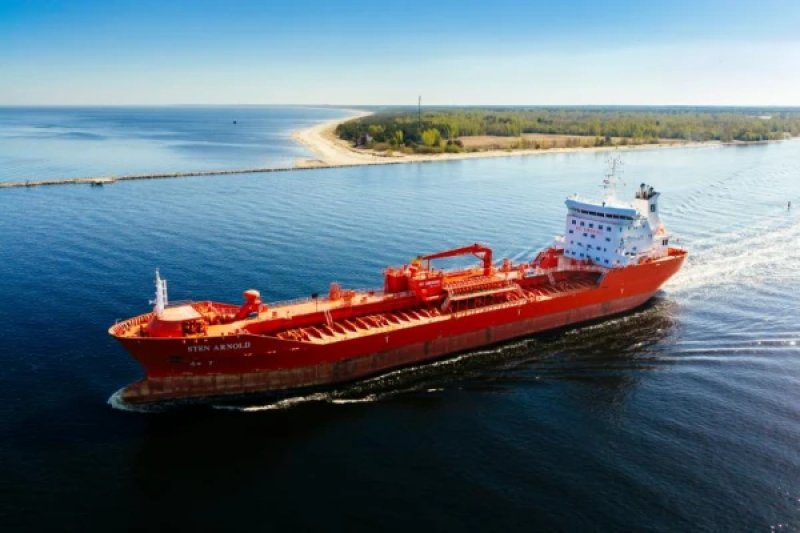
On May 5, 2026, the vessel STEN ARNOLD docked at the terminal of SIA "PARS TERMINĀLS" in the port of Riga, delivering 12,000 tons of aviation fuel from Norway. The delivery was organized by SIA "PAR TERMINAL" in collaboration with SIA "NAFTIMPEKS", confirming the effective and coordinated cooperation of strategic partners. "This delivery is an important confirmation of Latvia's ability to ensure stable and continuous supplies of aviation fuel even in times of crisis, while simultaneously diversifying cooperation partners. It is worth noting that in February of this year, the first vessel with aviation fuel from the United States arrived at the port of Riga, which, along with today's deliveries from Norway, clearly demonstrates Latvia's ability to create a reliable and diverse supply chain in cooperation with trusted international partners," stated the press release from the Freeport of Riga. The aviation fuel will be delivered to Riga Airport, supplying fuel to airlines operating at Riga International Airport. "In these geopolitical conditions, a stable supply of aviation fuel is more important than ever. It ensures the continuous operation of our Riga Airport and the airlines based there, strengthening Latvia's position as a Baltic aviation center. This successful delivery confirms that we are capable of promptly cooperating with various strategic partners, and we can expect the expansion of such interactions in the future," emphasized Minister of Transport Aitis Švinkas. Minister of Economics Viktors Valainis noted: "Latvia's ability to diversify supply sources is critically important for the resilience of our economy. Cooperation with partners such as Norway and the United States allows us to be confident in the continuous access to energy resources." The manager of the Freeport of Riga, Ansis Zeltiņš, emphasizes: "This delivery clearly demonstrates the strategic importance of the Riga port in energy resource supply chains. We are purposefully working to strengthen Latvia's energy security and ensure the continuity of logistics even in challenging geopolitical conditions."