

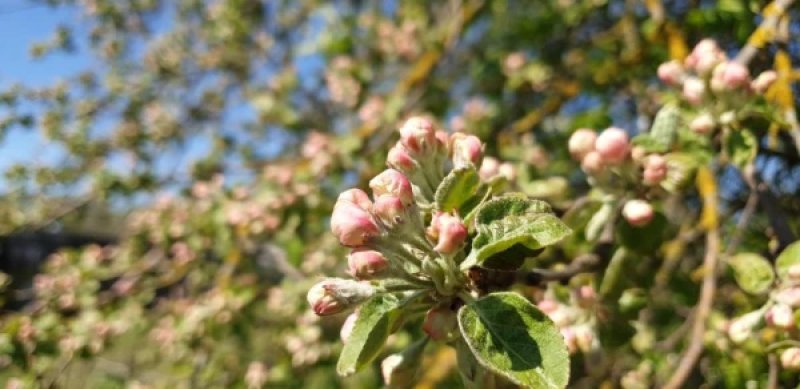
 Foto: BB.LV / Как восстановить сад после зимы?
## To Prune or to Plant? Spring clearly shows what has survived the winter in the garden and what has not. Some branches are actively budding, while others remain black, dry, or weakened. In such cases, one should not hesitate – damaged branches need to be pruned back to healthy wood or viable buds. If a tree has been completely damaged by frost, it will need to be replaced. When choosing a new seedling, it is important to consider its type. Seedlings with an open root system are recommended to be planted before mid-May, while container plants can be planted in the summer. Usually, the root ball of a container plant is wrapped in mesh, so it is better not to remove it to avoid damaging the roots. Otherwise, the seedling may not take well. Even a recently planted fruit tree needs to be pruned – this helps to form a strong crown and prevents excessive stretching of the plant. "Both the central shoot and the lateral branches should be shortened. Pome trees should be planted up to the grafting point, with the grafting point of dwarf apple trees remaining above ground level, while berry bushes are recommended to be planted a bit deeper to encourage better bushiness and higher yields," notes Zaiga. 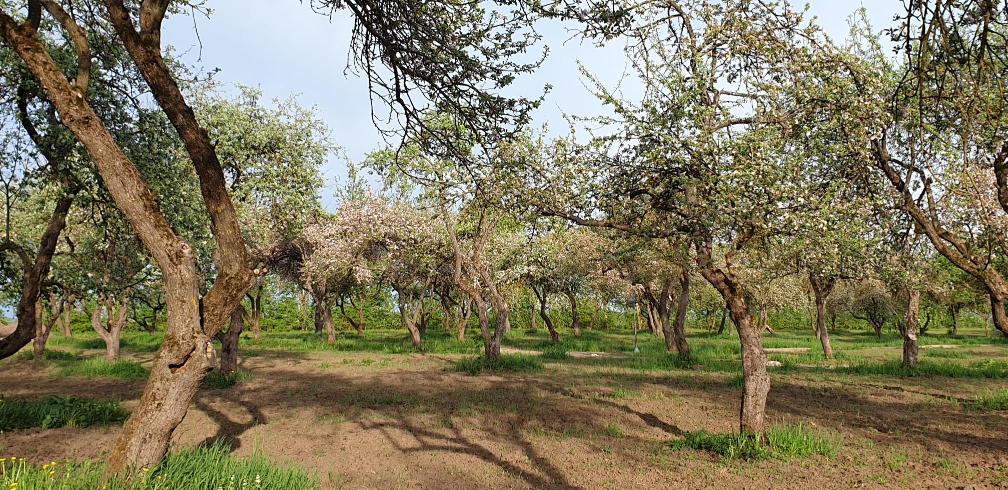 ## Fertilizing – Moderately and Timely Container plants growing in peat substrate can initially be left unfertilized – they have enough nutrients contained in the substrate. However, trees and shrubs already growing in the garden should be fertilized with nitrogen-rich fertilizers until John’s Day. The names of fertilizers may vary, but it is hard to go wrong with the so-called "spring fertilizer." When choosing other products, it is important to pay attention to the composition – nitrogen should prevail. Zaiga reminds that time-tested methods can also be used, such as spreading well-rotted manure around the plantings. The main thing is that it should not be fresh and should not come into direct contact with the plant roots, as this could damage the root system. To ensure that fertilizers nourish the plants rather than weeds, it is necessary to maintain a clean and weeded zone around trees and shrubs at least until mid-summer. To facilitate maintenance, one can form tree circles and cover them with mulch, which helps retain moisture and limits weed growth. 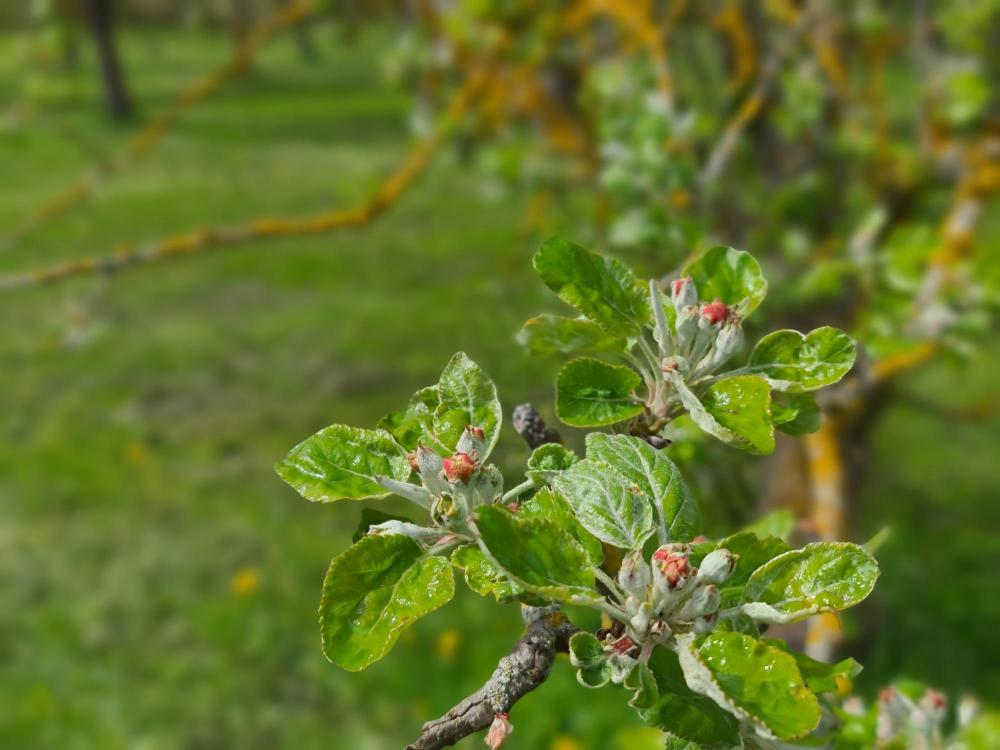 ## Insects Against Insects How to protect plants from pests? It turns out that the fight against aphids should start with ants. Aphid excretions serve as a food source for ants, which actively promote the spread of aphids on trees and shrubs. Even before pests appear, it is advisable to check the garden area and eliminate ants using hot water or special products, such as Bros. "If pests like aphids, leafrollers, thrips, and other insects have already appeared, it is necessary to act immediately. One common method of combating aphids is spraying with green soap. However, one treatment is not enough, as the product only affects adult individuals. Therefore, the treatment must be repeated at least four times," emphasizes Zaiga. An effective way to combat pests is through the use of Trichogramma and lacewings. Trichogramma are released during the flowering of cultivated plants and later during the egg-laying period of pests. The method of application varies depending on the packaging. Trichogramma in plastic containers need to be kept indoors at a temperature of 20–22°C for about a week before release, and then placed on branches in dry, windless weather. The new packaging is significantly easier to use – it is enough to hang it on a fruit tree or shrub. This year's novelty from Bioefekts – lacewings – are universal helpers in the fight against aphids, spider mites, scale insects, thrips, whiteflies, Colorado beetles, and other pests. The main condition is to use them immediately after purchase, without storing them "just in case."  ## Knowledge Against Diseases A cold winter often damages the bark and buds of plants, which contributes to the development of various diseases, especially fungal infections. Plants weakened by frost are less resistant to diseases in spring. To understand what exactly threatens the plants and how to act correctly, it is not enough to rely solely on guesses. Zaiga emphasizes the importance of basic knowledge, which can be obtained through courses from the State Plant Protection Service (VAADA). This helps not only to recognize diseases but also to choose the most effective methods of control. It is important to remember that the most effective plant protection means are not available for free access without appropriate training and certification as a professional user of plant protection products. It is also recommended to regularly visit the VAADA website – it is a useful source of information for gardeners, allowing them to learn in a timely manner about the activation of spores of various diseases and take measures even before visible signs of the problem appear. 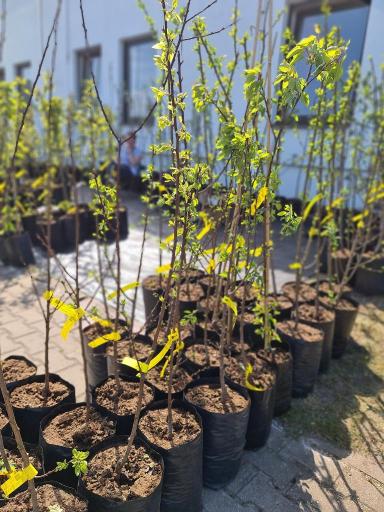 On May 9 and 10, the 'Garden and Lifestyle 2026' exhibition will showcase seedlings and seeds, garden equipment and tools, greenhouses, pergolas, and garden furniture. Visitors will not only be able to purchase everything necessary for the garden but also receive consultations from landscape architects and other industry specialists. More details: www.bt1.lv/darzs **Follow the news:** www.facebook.com/Darzsundzivesstils www.instagram.com/darzs.un.dzivesstils **Working hours:** May 9: 10:00–18:00 May 10: 10:00–17:00
