

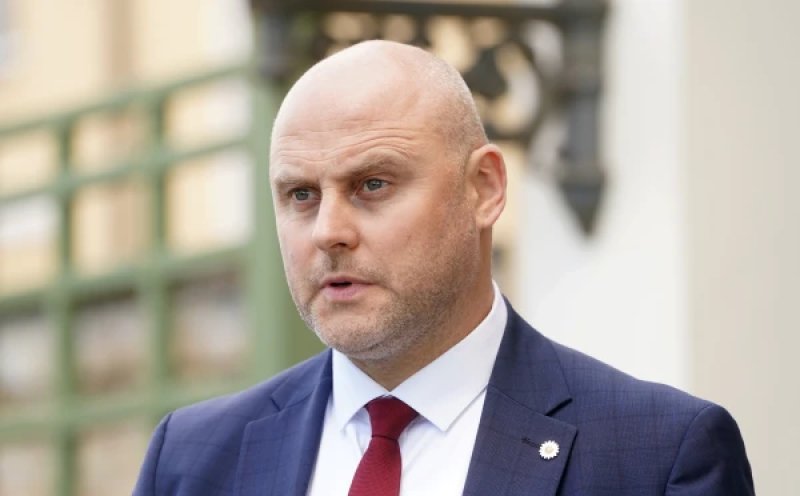
So, contrary to initial predictions, Edgars Rinkēvičs did not wait until Monday and today nominated a candidate for prime minister - as already reported, it is Saeima deputy Andris Kulbergs. Let us remind you that the "core" of the possible coalition consisting of the National Alliance, the United List, and the Union of Greens and Farmers could not agree on a single candidate, and each political force named its own - Ilze Indriksone, Andris Kulbergs, and Viktors Valainis, respectively. So why did the president choose Kulbergs? The first reason is that after the inglorious end of the Siliņš government, Rinkēvičs came to the logical conclusion that the new "temporary" government (with a term of about 5-7 months, until the formation of a new government after the elections) should be led by a representative of the opposition. And Andris Kulbergs was quite a prominent representative of the opposition in parliament, having chaired two parliamentary investigative commissions, including one on Rail Baltica, meaning he knows the problems of the project of the century, so to speak, from the inside. The second reason is that the United List represented by Kulbergs refused to draw "red lines" before forming the government, thus not rejecting cooperation with either "New Unity," "Progressives," or "Latvia First," which provides room for maneuver. The third reason is that the 46-year-old prime ministerial candidate Kulbergs was a businessman for many years before being elected to the current Saeima, which means he understands economics and finance. This is extremely important, as there will be no time for hesitation and "training" for the pre-election government. In any case, the president has given the prime ministerial candidate very little time to form a government - until May 25 inclusive. Kulbergs needs not only to create a government but also to ensure that it receives a mandate of trust in the Saeima. Notably, Kulbergs' birthday is on May 26. We will soon find out if he can gift himself the premiership.