

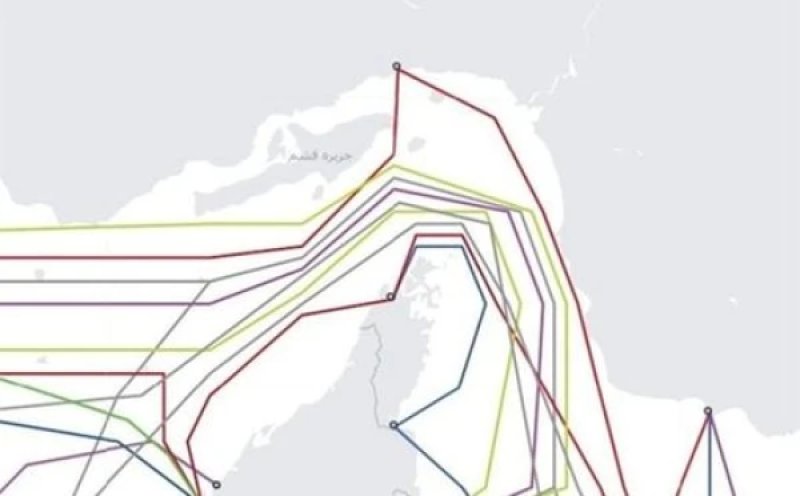
Iran's military representative Ebrahim Zolfaghari stated directly on the social network X that Tehran will impose tariffs on internet cables. According to the plans, giants like Google, Microsoft, Meta, and Amazon will have to comply with Iranian laws, pay for licenses for cable passage, and the rights to their repair and maintenance must be transferred exclusively to Iranian firms. Some of these tech companies have invested in the infrastructure of the strait, but it remains unclear whether their lines pass through Iranian territorial waters. Furthermore, the regime's enforcement mechanisms remain in question, as strict U.S. sanctions prohibit any payments to Tehran, and companies may view these demands as mere bluffs. Nevertheless, Iranian state media warn of the risks of cable damage, which could impact global data transmission valued in trillions of dollars. Amid fears of escalating conflict following Donald Trump's return to the White House, Iran is demonstrating that it possesses powerful asymmetric tools beyond military force. Experts believe Tehran is trying to impose such a high price on the global economy that no one would dare to attack the country. Most international operators have historically avoided Iranian waters for security reasons, concentrating cables in a narrow strip along the coast of Oman. However, two major intercontinental highways — Falcon and Gulf Bridge International (GBI) — pass through Iranian territorial waters. With divers, small submarines, and underwater drones, the Islamic Revolutionary Guard Corps (IRGC) poses a real threat to this infrastructure. Experts warn that any large-scale attack could trigger a "digital catastrophe" across several continents: Iran's Gulf neighbors would face disruptions in banking and oil exports, India would lose billions in outsourcing, and financial transactions between Europe and Asia would slow down. Iranian media are attempting to justify the demands with the 1982 United Nations Convention on the Law of the Sea (UNCLOS), citing Egypt's example, which earns hundreds of millions of dollars from the transit of cables through the Suez Canal. However, lawyers note that the Suez Canal is an artificial route on Egyptian territory, while the Strait of Hormuz is a natural waterway with a different legal status. And while Iran may theoretically set conditions for laying new lines in its waters, it is obligated to adhere to previous agreements under existing contracts. As Iran tests the waters, experts note that Tehran has realized the extent of its geographical influence on the digital stability of the planet.