

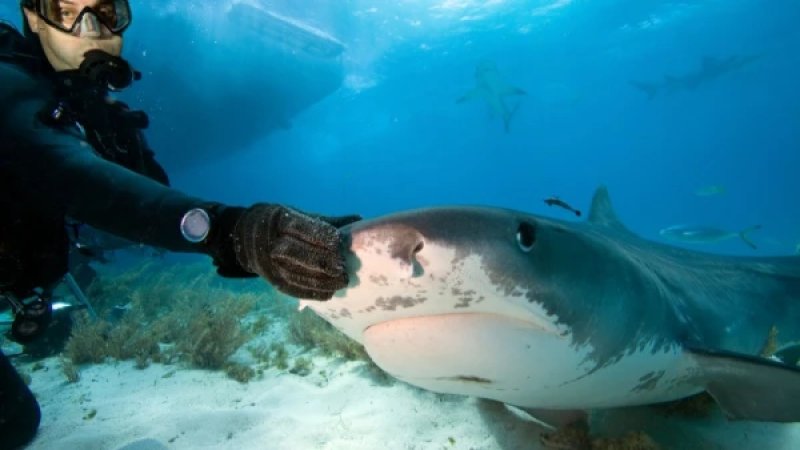
Oceans directly influence the weather across our planet. Most of the information that helps meteorologists improve forecasts and predict extreme weather events comes from the depths of the waters. To determine natural conditions, computer models use data from precise observations. The more fresh data about the ocean scientists receive, the more accurate the forecasts become and the longer they can be made. To fill in the gaps in those remote regions where traditional tools like satellites, buoys, and planes are scarce or too expensive, researchers decided to seek help from the most formidable inhabitants of the seas — sharks, reports the Los Angeles Times. **Five Minutes to Catch** Recently, oceanographers conducted a unique experiment off the coasts of Long Island and Cape Cod in the United States. They attached special sensors to 18 blue sharks and one mako shark. These fish helped gather crucial data about water temperature in those hard-to-reach parts of the Atlantic Ocean, where it is extremely difficult for humans to access with regular instruments. The climate models that utilized over 8,000 observations of the tagged predators reduced the margin of error in weather forecasts by 40%. The authors of the study collaborated with commercial fishing crews to carefully catch sharks using regular fishing rods and reels. The lead author of the research, Laura McDonnell from the Woods Hole Oceanographic Institution (USA), explained that the large predators were quickly calmed by continuously passing fresh seawater over their gills. After that, specialists attached a miniature tag to the fish's body and returned it back to the ocean. The entire procedure took no more than five minutes to avoid harming the animal. **Swimming Along the Gulf Stream** Researchers did not choose blue sharks and mako sharks by chance. They preferred them over the more well-known great white sharks, which also frequently venture into these waters. The reason is that blue sharks and mako sharks cover enormous distances and dive to much greater depths. They constantly swim along the powerful eddies and currents of the Gulf Stream. This warm current flows from the Gulf of Mexico into the North Atlantic and directly shapes the climate. The Gulf Stream significantly affects the amount of precipitation in the southeastern United States, which regularly suffers from severe droughts, and also determines winter temperatures on the East Coast. The results obtained remain experimental for now, but in the long run, this work has the potential to greatly improve lives. Accurate long-term weather forecasts have a serious impact on the economy, crop yields, and management of marine resources. In the opinion of the editorial team, it would also be good to identify intelligent fauna in Latvia — we also want decent crop yields.