

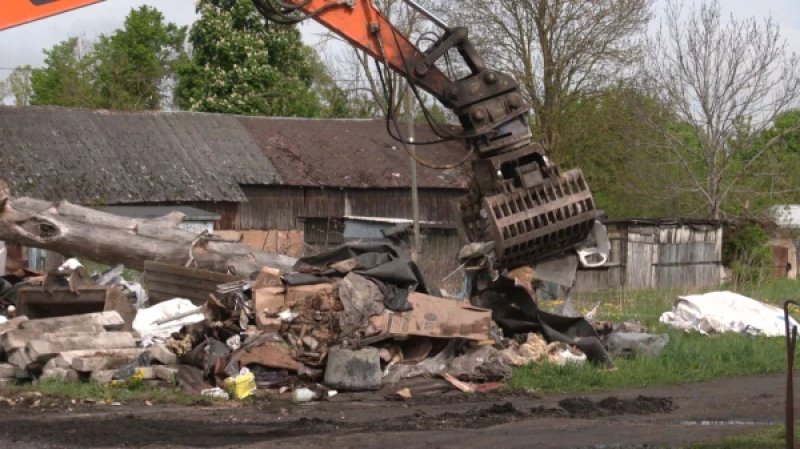
The demolition of old sheds in Eleja has caused outrage among local residents. The buildings, located next to apartment houses, had been used for decades to store firewood, briquettes, tools, and household items, reports the Bez Tabu program ([TV3](https://tv3.lv/beztabu/nejedzibas/lasija-mantas-pa-gruvesiem-eleja-nojauc-desmigadem-lietotus-skunus-iedzivotaji-satriekti/)). Although the sheds belonged to the local government, residents were not charged for their use. Over time, the buildings began to deteriorate; however, many people, according to them, tried to maintain the premises on their own. Recently, the structures were completely demolished with the approval of the Jelgava municipality. The situation is particularly difficult for pensioner Ona. > “People have been left without sheds! People had arranged their corners,” she says. According to her, after the demolition, residents literally collected their belongings among the ruins. > “People were walking around and collecting what belongs to them among the ruins,” the woman said. She adds that now she has nowhere to store two and a half tons of briquettes that are needed for the winter. The problem is exacerbated by the fact that many houses in this area do not have basements or other utility rooms. The municipality explains the decision by stating that the sheds were in a state of emergency and posed a safety threat. They acknowledge that some residents did take care of the buildings; however, some premises were abandoned and used as dumps. At the same time, the residents believe that the sheds were brought to such a state precisely due to years of inaction on the part of the authorities. In their opinion, the municipality could have timely concluded lease agreements, defined responsibility for the maintenance of the premises, and organized proper servicing of the buildings through a property manager. > “If people hadn’t invested money, effort, and labor into this building, there would be nothing here,” the locals say. The conflict continues around another shed building that has so far been preserved. The structure is in good condition; however, the municipality recently sold it at auction. Pensioner Olga, who used one of the premises and invested her own money in repairs, now fears that she will soon be left without a place to store firewood and belongings. > “I can’t pay rent because I have a minimal pension,” she says. The woman recounts that for many years she participated in the improvement of the municipality and even received a certificate of appreciation from the local government. > “Back then, they came from the municipality and brought such roses! Now there’s nowhere to store things,” Olga says. The municipality acknowledges that the situation has been painful for both residents and local authorities. The story in Eleja has once again raised the question of how small municipalities manage old infrastructure and how much residents' interests are taken into account in such decisions.