

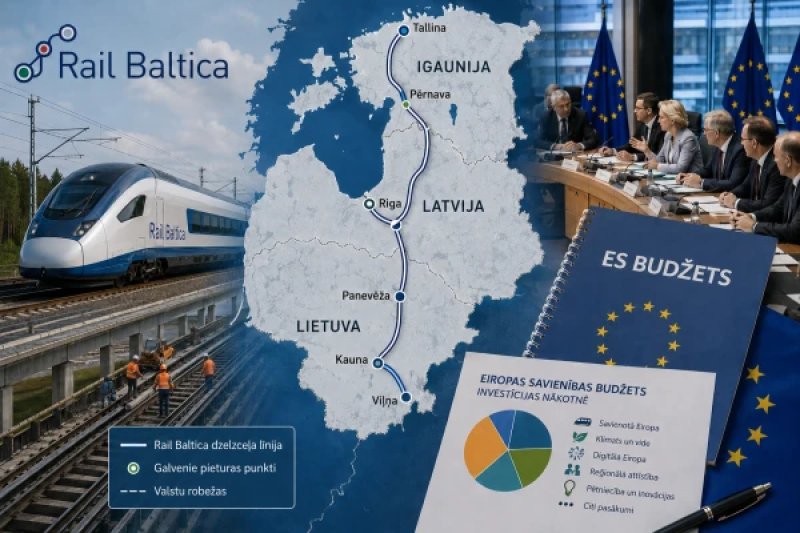
In the European Union, one of the most tense and important political processes of the coming years is beginning — negotiations on the new multiannual EU budget, public media report. This concerns the distribution of nearly two trillion euros over the next seven years. Already now, two camps with opposing interests have clearly emerged in Brussels. On one side are the so-called 'frugal countries' that do not want to increase the overall EU budget. This group includes, in particular, Germany, France, and Sweden. On the other side are the countries that call themselves 'friends of cohesion.' These are the Baltic states, Eastern and Southern European countries that advocate for a larger budget and the preservation of substantial funding for regions. For Latvia, the negotiations hold special significance. Riga hopes to secure additional funds for strengthening infrastructure, border security, and developing transport projects. One of the key issues remains the further funding of Rail Baltica. Against the backdrop of the war in Ukraine and rising military threats, the topic of infrastructure in the Baltics is increasingly viewed not only as an economic issue but also as part of the overall security of the region. The Parliamentary Secretary of the Latvian Ministry of Foreign Affairs, Artyom Urshulsky, stated that the country will seek to include special priorities for the eastern border of the EU and defense investments in the budget. Meanwhile, donor countries are increasingly demanding cuts to traditional expenditures and a redistribution of funds for new tasks. Sweden has already stated outright that the EU needs a 'better, not a bigger budget.' Denmark takes a slightly more flexible position but also opposes further increases in spending on traditional areas, including agricultural support. Instead, the northern countries want to focus on funding defense, supporting Ukraine, and enhancing Europe's competitiveness. In fact, the European Union is currently trying to solve a complex task: to simultaneously strengthen defense, finance aid to Ukraine, support climate policy, and maintain previous regional development programs. For the Baltic states, the outcome of these negotiations could directly affect the volume of future investments in transport, energy, and security. In June, EU leaders will transition from general principles to discussing specific amounts for the first time. The European Parliament is also trying to exert additional pressure on the negotiations. Although the influence of the deputies on the multiannual budget is limited, the European Parliament has already demanded an increase of at least 10% and hints at a willingness to prolong the approval process. Negotiations on the EU budget are traditionally considered among the most complex in European politics and are usually accompanied by fierce conflicts between donor countries and states that receive more funds from European funds.