

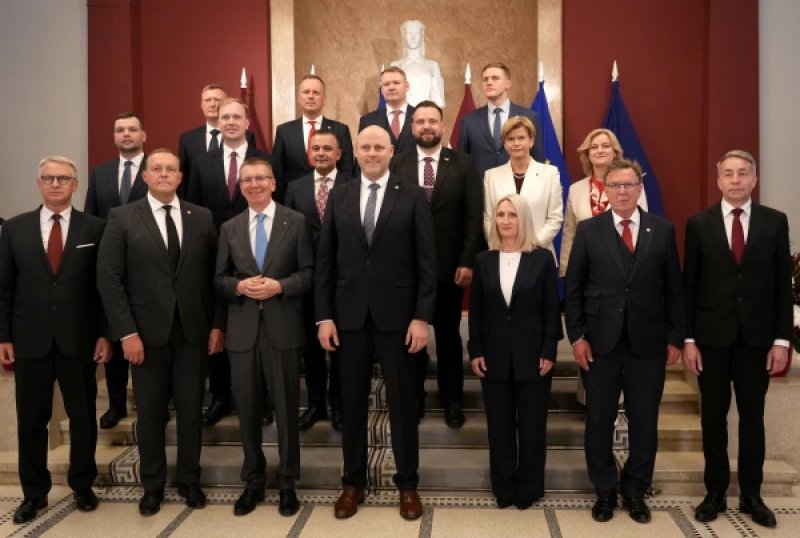
The formation of the new government under the leadership of Andris Kulbergs has become one of the fastest political processes in the modern history of Latvia. This assessment was given by political scientist Janis Ikstens, commenting to the LETA agency on the approval of the new cabinet of ministers by the Saeima. According to him, if we do not take into account certain technical nuances, this may be the fastest attempt to form a government since the restoration of Latvia's independence. One of the reasons for such high speed, the expert believes, is the current international situation, which requires the state to have political stability and the ability to make quick decisions. An additional factor was the pressure of time within the political system itself. Ikstens stated that the President of Latvia made it clear to the participants in the negotiations that if the process was delayed, the mandate to form the government could be given to another candidate. This created additional motivation for the parties to reach agreements on contentious issues more quickly and seek compromises. The political scientist also noted Andris Kulbergs' personal interest in successfully concluding the negotiations. In his opinion, forming the government was not only a professional task for the politician but also a matter of political prestige. The circumstances under which the change of power began also played an important role. The resignation of the government of Evika Silina occurred quite unexpectedly and left the participants in the negotiations little time for lengthy consultations, which usually accompany the formation of a new coalition. What is important to understand is that the speed of government formation does not guarantee its further stability. Complex issues that the parties managed to agree on during the negotiations may again become a subject of disputes during the work of the cabinet of ministers. That is why Ikstens urges not to draw conclusions about the future of the coalition solely based on how quickly it was formed. In his opinion, a much more serious test will be the ability of the new government to maintain unity and make decisions in the context of a complex internal and external agenda. On Thursday, the Saeima approved the new government headed by Andris Kulbergs. Now the coalition must transition from negotiations to practical work on issues of security, economy, and public administration.