

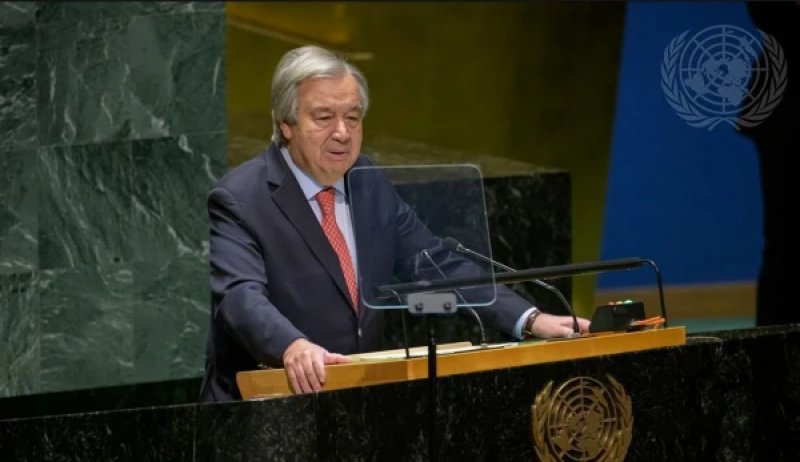
The current UN Secretary-General António Guterres has held this position since January 1, 2017, and his term will expire on December 31. The UN Secretary-General is elected for five years, usually for two terms, totaling ten years. Currently, five candidates have been officially nominated. The Director General of the International Atomic Energy Agency Rafael Mariano Grossi has been nominated by Argentina. Brazil and Mexico have nominated former Chilean President, former UN High Commissioner for Human Rights, and Vice President of the Madrid Club Michelle Bachelet. In March, the new right-wing President of Chile, José Antonio Kast, withdrew Bachelet's candidacy for the position of UN Secretary-General. Burundi has nominated former Senegalese President Macky Sall for the position of UN Secretary-General, while Costa Rica has nominated the Secretary-General of the UN Conference on Trade and Development (UNCTAD) Rebeca Grynspan. In turn, Antigua and Barbuda has nominated former President of the UN General Assembly, Ecuadorian diplomat, scholar, politician, and writer, Executive Director of the organization "GWL Voices for Change and Inclusion" María Espinosa for the position of UN Secretary-General. The Ministry of Foreign Affairs reports that interviews with candidates for the position of UN Secretary-General took place on April 21 and 22 as part of the UN General Assembly in New York. An interview with Espinosa is scheduled for June 15, as her candidacy was announced after the April interviews. The Ministry notes that there is no specific deadline for countries to nominate candidates, so applications for new candidates may be submitted mid-selection process. However, the President of the UN General Assembly has urged countries to propose candidates by April. Clarifying the procedure for appointing the UN Secretary-General, the Ministry emphasizes that first, the Presidents of the General Assembly and the UN Security Council call on countries to propose their candidates. After candidates are nominated by UN member states, the President of the General Assembly organizes informal consultations with the candidates. Then, informal, non-public votes take place in the UN Security Council, during which Security Council member states attempt to gauge the level of support for the candidate, known as "straw polls". Candidate hearings in the UN Security Council are expected to begin in June, and the first indicative votes may start in July. Finally, based on the recommendation of the UN Security Council, the UN General Assembly appoints the Secretary-General, making the Security Council's decision decisive. The process of appointing the UN Secretary-General may conclude by the end of the year. The Ministry adds that it is still premature to assess the chances of the existing candidates, as additional candidates may still be nominated.