

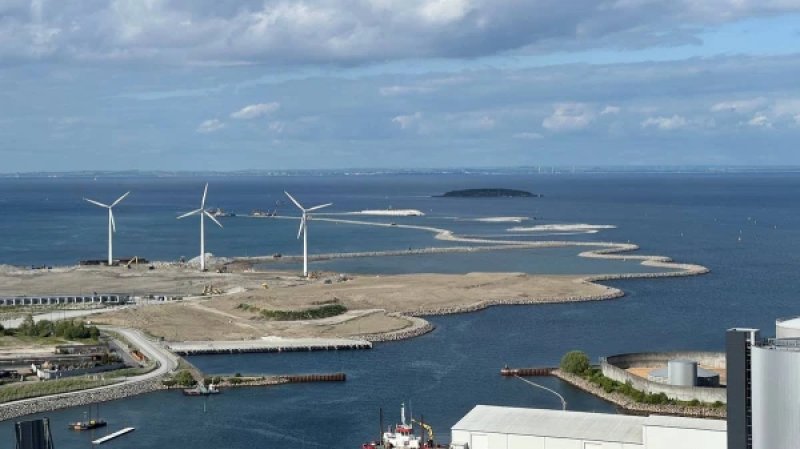
## A New Island Near Copenhagen The Lynetteholm project is being implemented between the Nordhavn and Refshaleøen districts in the port of Copenhagen. Once construction is completed, the area of the artificial island will be about 275 hectares — roughly equivalent to the area of 385 football fields, [reports](https://www.polsatnews.pl/wiadomosc/2026-05-19/w-europie-powstaje-nowa-wyspa-dunczycy-chca-pomiescic-tam-35-tys-ludzi/) polsatnews. The new area will be connected to the mainland by a system of roads, tunnels, and public transport. In particular, a new M5 metro line is planned to be built, with nine stations between Copenhagen Central Station and the island. The first section of the line is expected to open in 2036, and the second in 2045. The project also includes the construction of a 10-kilometer Østlig Ringvej road tunnel and a network of bicycle paths. The project is managed by the company By & Havn, with Per Aarsleff A/S as the general contractor. According to plans, about 20,000 apartments for 35,000 residents and approximately 35,000 new jobs will be created on the island. The estimated cost of the project is about 20 billion Danish kroner. 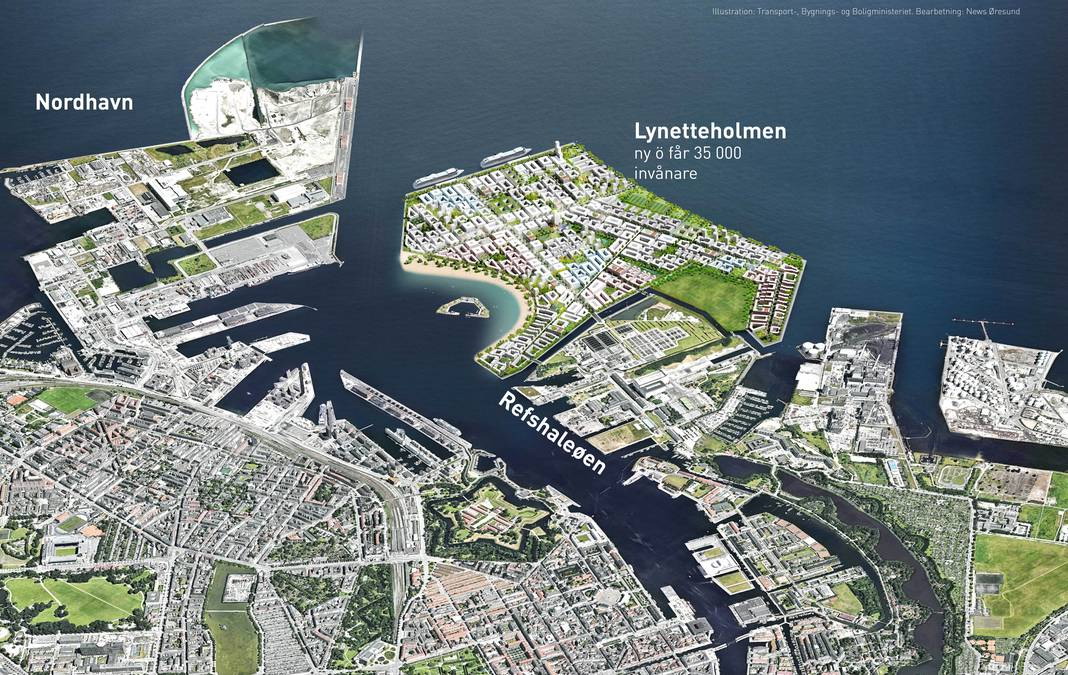 ## Construction is Planned for Nearly Half a Century The project is long-term in nature. Work began in 2022. In the first phase, breakwaters and logistics infrastructure were constructed. This phase was completed in the spring of 2023. As of October 2023, the second phase is ongoing — large-scale land reclamation and coastal reinforcement. Its completion is expected by mid-2026. The opening of a coastal park and green spaces for Copenhagen residents is scheduled for 2030. In 2035, a new metro line is expected to connect the island with the city center. The construction of residential and office buildings is expected to begin around 2050, with full project completion and habitation of the area anticipated by 2070. Today, the outlines of the future island are already clearly visible above the water's surface. About 300 meters remain until the complete closure of the ring of stone dikes. ## Environmentalists Warn of Risks From the very beginning, the project has sparked fierce debates. When the Danish parliament approved the construction by a majority vote in June 2021, protesters from the "Stop Lynetteholm!" movement, which unites thousands of activists, gathered outside the building. Even before the vote, the Clean Baltic coalition, which includes 24 environmental organizations from 11 Baltic Sea region countries, sent a letter to Danish authorities warning of potential negative consequences for the Baltic Sea ecosystem. According to environmentalists, the artificial island could alter water flow in the Øresund Strait and restrict the influx of oxygen-rich water from the North Sea into the Baltic, which could worsen the marine environment. Despite complaints from environmental organizations, the European Commission refused to halt the project. In response, By & Havn launched a large-scale environmental monitoring program lasting nearly 30 years. More than 25 monitoring stations continuously check water quality, as well as the state of flora and fauna. Additionally, the developers promise to create new habitats for marine organisms. A seven-kilometer stone dike is expected to become a habitat for mussels, seaweed, and other marine species. ## Protecting the City and a New District of the Future The main goal of Lynetteholm is to protect Copenhagen from storm surges and rising sea levels. The island, along with a system of protective structures, is intended to serve as a natural barrier for the city port and central districts of the capital. At the same time, the project addresses another important task — creating space for a future residential area. According to the architects' vision, a modern Scandinavian district will emerge here, featuring plenty of green spaces, developed public transport, and minimal car traffic. If the project is fully realized, by the mid-21st century, Europe will gain not just a new island, but an entire urban district created by humans almost from scratch. For Copenhagen, this represents both protection against climate threats and an opportunity to expand the city without harming the historic center.