

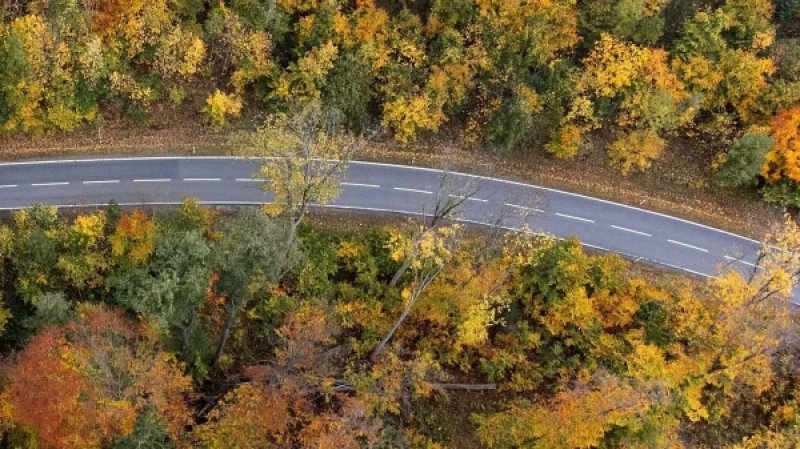
Route 46 is the longest ghost highway in Germany. It is a legacy of Nazi construction ideology and propaganda, rather than efficiency. Route 46, stretching 70 kilometers, is considered the longest officially registered "ruin" of an autobahn in Germany. Today, it is merely a relic, reminiscent of the massive project from the National Socialist era, initiated shortly before World War II and never completed. The autobahn runs between Bad Hersfeld and Würzburg. The route reflects not so much the demands of efficiency, but rather the construction ideology and propaganda of the Nazis. The autobahn was meant to showcase the beauty of the German homeland to drivers. Among the scenic highlights, for example, are the ruins of Homburg Castle. ### Construction Was Never Resumed After 1945 Initially, the long route was planned as a north-south connection through the southern part of Rhön and Spessart. The first construction works began in 1937: large labor forces were mobilized, and the latest technology of the time was used. On October 4, 1939, construction of the autobahn was halted. World War II was gaining momentum. Priorities shifted towards militarization. One of the most notable structures remains the high bridge pylon at Schonderfeld on the Franconian Saale River. Along the route, several typical structures from the 1930s have also been preserved, such as stone arch culverts and natural stone tunnel portals. From a technical perspective, the construction was oriented towards the standards of the Reichsautobahn network in effect at the time. After 1945, work was never resumed: partly due to the impracticality of the route, which was too narrow in places and had steep climbs, and partly due to the shift in transportation priorities of the Federal Republic. Instead, the A7 motorway was built as the north-south axis through Hesse and northern Bavaria. Since 2003, Route 46 has been protected as a historical monument. It is considered the longest fully preserved section of an autobahn in Europe that was never completed or put into operation. Today, the former route is organically integrated into the landscape and serves as a habitat for animals and plants in places, as well as a walking path for tourists. In several locations, informational signs have been installed, telling the history of Route 46.