

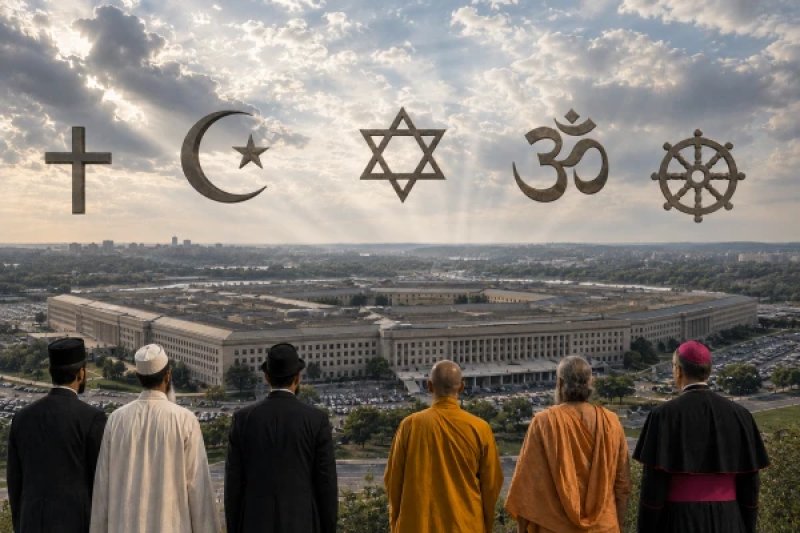
The Pentagon has announced a significant reduction in the list of religious categories that service members can indicate in their personal records. A total of 180 religious affiliation codes have been removed from the system, resulting in the number of available options being reduced to 31, [reports](https://entrevue.fr/ru/entrevue/le-pentagone-reduit-drastiquement-la-liste-des-religions-des-soldats-americains/) entrevue. According to the new rules, of the remaining categories, 22 pertain to various branches of Christianity. Previously, service members could choose from over 200 options reflecting a wide range of religious and philosophical beliefs. ## The Decision Raised Questions in the Military The new measure immediately attracted the attention of service members and veterans. Many are questioning the criteria by which the Pentagon conducted the selection and why a significant number of religions and beliefs were excluded from the official list. Particular discussion has arisen over the fact that most of the retained categories pertain specifically to Christian denominations, while many other religious directions are no longer represented in the accounting system. At the same time, the U.S. Department of Defense has not yet published a complete list of excluded beliefs nor explained the reasons for the removal of each specific category. ## Debates on Freedom of Conscience The reform is being conducted against the backdrop of ongoing discussions about the role of religion in American state institutions, including the armed forces. Pentagon representatives have not yet disclosed the official goals of simplifying the system. Service members whose beliefs are no longer represented in the list will have to choose the closest category from the remaining options. Proponents of the reform argue that reducing the number of codes will allow for the standardization of administrative accounting and simplify the work of personnel services. Critics, however, believe that such a decision may limit the ability of service members to accurately indicate their religious affiliation and raises questions about the principle of freedom of conscience. The reduction of the list of religions has become one of the most notable administrative reforms of the Pentagon in recent years. While some view it as a technical simplification of paperwork, others fear that the changes may affect the representation of religious diversity in the U.S. armed forces and spark new debates about the rights of service members.