

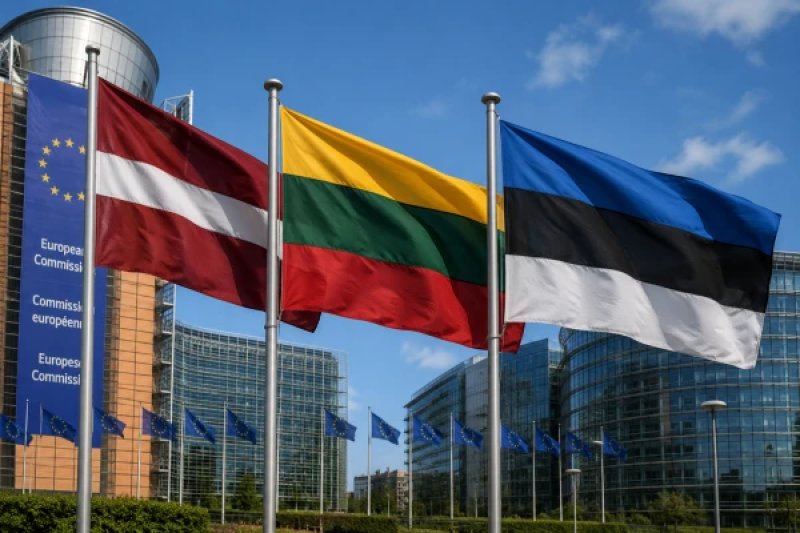
The Baltic countries play a significantly more important role in international politics than is commonly believed, yet many stereotypes about the region remain alive. This opinion was expressed on TV3 by Member of the European Parliament Sandra Kalniete. According to her, negative perceptions of the Baltic countries have been formed over the years and continue to spread in the international information space. Kalniete believes that Russia deliberately supports such stereotypes, seeking to establish in the minds of foreign experts the idea of the Baltic countries as an unstable and risky region. This has become particularly noticeable since the beginning of Russia's full-scale war against Ukraine. According to the politician, despite statistical data and real economic indicators, the Baltic countries are often portrayed as a territory under constant threat and unattractive for investment. However, Kalniete believes that the facts tell a different story. This is why she called the establishment of the International Baltic Security Center in Brussels an important step, which will focus on promoting objective information about the region and countering disinformation. It is important to understand that the issue of the reputation of the Baltic countries today is linked not only to politics but also to investments, security, international cooperation, and the perception of the region abroad. In Kalniete's opinion, in recent years, attitudes towards the Baltic region have gradually changed, and the influence of Russian propaganda on public opinion in Europe is weakening. "The fog is gradually lifting," the MEP characterized the situation. At the same time, she believes that many Western European countries still do not perceive the threats from Russia as acutely as the Baltic countries and other Eastern NATO states. The politician is particularly concerned about the development of the Russian military-industrial complex. According to her, the volumes of arms production may already exceed the needs of the war against Ukraine. Kalniete believes that this could indicate Russia's preparation for possible future conflicts beyond Ukraine. [Read more: At the borders of the Baltic and Northern European countries, Russia is creating bases for tens of thousands of military personnel](https://bb.lv/statja/v-mire/2026/06/11/u-granic-stran-baltii-i-severnoi-evropy-rossiia-sozdaet-bazy-na-desiatki-tysiac-voennosluzashhix) She also noted that Europe is currently lagging behind in the development of drone technologies—a field that is becoming one of the key factors in modern security. The International Baltic Security Center established in Brussels plans to promote the interests of the countries in the region on international platforms, counter disinformation, and strengthen the understanding of the role of the Baltics in the European Union and NATO.