

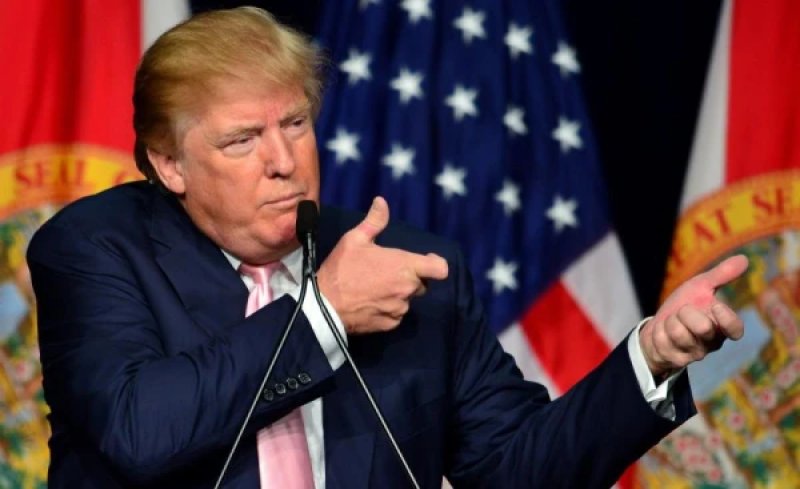
U.S. President Donald Trump canceled planned strikes on Iran, stating that the reason was progress in negotiations. "Based on the discussions with the Islamic Republic of Iran being brought to the highest leadership of Iran and approved, I canceled the strikes scheduled for this evening," the head of the White House wrote on his social media platform Truth Social on the evening of June 11. In addition to the U.S., the final points of the deal have been agreed upon by "all involved parties" - Israel, Saudi Arabia, the UAE, Qatar, Turkey, Pakistan, Bahrain, Kuwait, Jordan, Egypt, and other countries, Trump assured. "The maritime blockade will remain in full force until this deal is completed - the time and place of signing will be announced shortly," he added. ## Trump Announced the Signing of the Agreement in Europe, Which He Will Not Attend As noted by AFP, later that evening, while speaking with reporters, the American president stated that a "magnificent agreement" with Tehran "could be signed" as soon as this weekend, "presumably in Europe." However, Trump said he would not be able to personally attend the signing due to his 80th birthday on June 14, but Vice President JD Vance "will be there." According to him, the agreement would mean that Iran "will never have nuclear weapons," and the Strait of Hormuz would be reopened. Just a few hours earlier, the head of the White House stated in an interview on Fox News about the intention to seize Iran's key oil hub - the island of Khark. "I would prefer that. I’m not sure the U.S. has the resolve," he said. Additionally, during the same dialogue, he announced "new strikes, larger, more powerful, stronger," but noted that he would not want to attack bridges and power plants. ## Iranian Foreign Ministry: Tehran Has Not Yet Made a Decision on the Agreement with the U.S. Tehran has not yet made a final decision regarding the agreement with Washington, according to statements from Iranian authorities. "At this moment, Iran has not reached a final decision regarding the agreement," said the spokesperson for the country's Foreign Ministry, Esmail Baghaei, to Iranian media on the night of Friday, June 12. A few hours earlier, the speaker of the Iranian parliament and a member of the negotiating team, Mohammad Bagher Ghalibaf, warned the United States that "impulsive" decisions in the war with Tehran would lead to an "endless quagmire." Otherwise, "you will meet a different Iran," he wrote on social media X. ## On June 10, the U.S. Struck Iran Again, and Tehran Closed Hormuz Again The U.S. military resumed strikes on targets in Iran on the evening of June 10. "These strikes are a response to Iran's unjustified and ongoing aggression," stated the Central Command CENTCOM in a message on X. Shortly before this, Donald Trump announced new attacks on Iran. Following his statements, U.S. Secretary of Defense Pete Hegset also threatened Tehran with new strikes, noting that the purpose of the announced attacks is not to resume war but to create conditions for an agreement. The Iranian news agency IRNA reported explosions in the area of the cities of Minab and Sirik. According to Reuters, explosions were also heard near the airport and military base in the city of Bandar Abbas on the shores of the Persian Gulf, as well as in the port city of Gorgan. In response to the new strikes, Iran reportedly attacked American military bases in the Persian Gulf countries and in Jordan, including using ballistic missiles. Sirens and air defense operations were observed in Kuwait and Bahrain. Additionally, Tehran once again announced the complete closure of Hormuz. According to a statement from Iran's military command, any vessel attempting to pass through the strait will be attacked.