

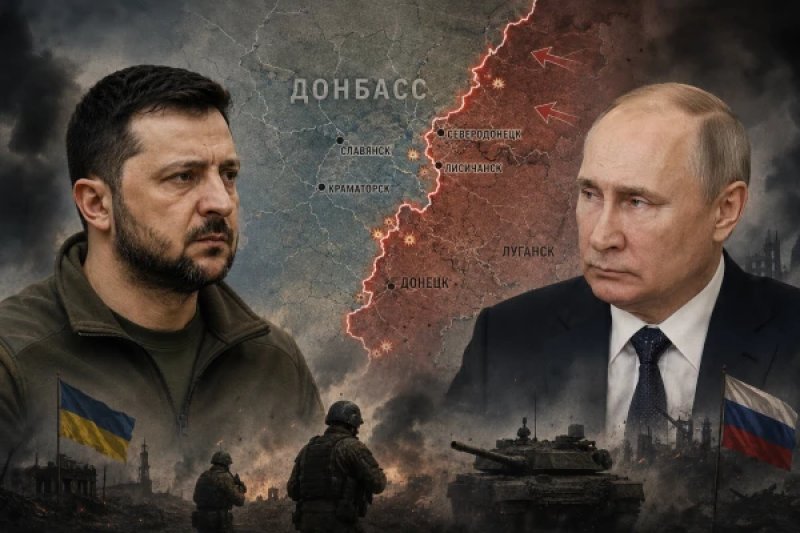
Ukrainian President Volodymyr Zelensky commented on the recent statements by Vladimir Putin regarding the situation at the front and the state of affairs in Russia in his evening address. The occasion was an interview with the Russian president, in which he again stated that Russian troops are gradually occupying new territories and expect to establish control over the entire territory of Donbas. According to Zelensky, Donetsk region remains one of the main targets of Russian attacks, but Ukrainian forces continue to hold back the offensive. "Since the beginning of the full-scale war, the Russian army has already set deadlines for itself to capture our Donetsk region 15 times. The political leadership of Russia is constantly obsessed with Donbas," the Ukrainian president stated. He added that despite numerous statements from Moscow, Ukrainian military personnel do not allow Russian units to achieve their set goals. Zelensky also commented on Putin's words regarding the fuel supply situation in Russia. Earlier, the Russian president acknowledged that disruptions in gasoline supply are related to Ukraine's strikes on infrastructure facilities, but assured that the situation remains under control. In response, Zelensky stated that the residents of Russia themselves see the real consequences of the war. "Putin can talk on television as much as he wants about how he controls everything. But the Russians themselves, standing in line for gasoline, see that their 'three-day war' has been going on for five years now," he said. What is important to know: Zelensky's statements were a response to the latest public appearances by Putin and reflect the ongoing information dispute between Moscow and Kyiv. Both sides regularly provide opposing assessments of the situation both at the front and within their countries. According to the Ukrainian side, the most intense fighting continues specifically in the Donetsk region, where Russia has concentrated its main efforts in recent months. The military situation in the region remains tense, and both sides continue to exchange statements about the situation on the front line and the consequences of the ongoing war.