

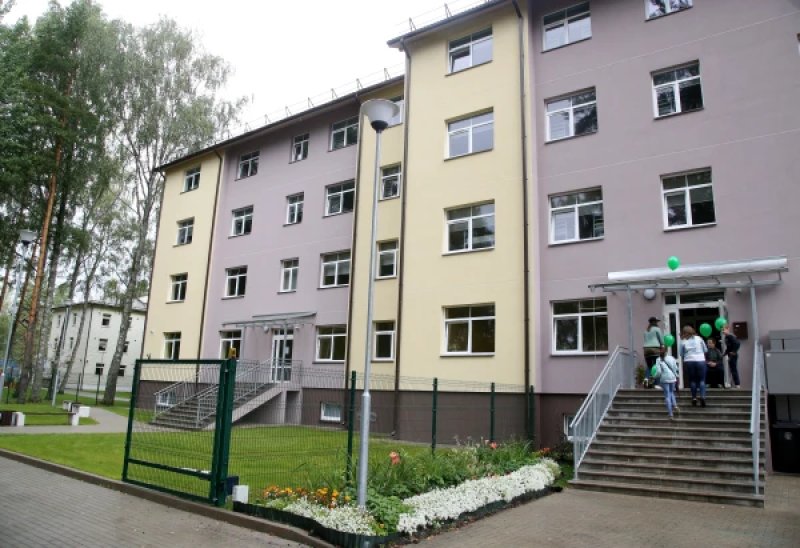
The asylum seeker accommodation center in Mucenieki currently houses more than 460 people — exceeding its designed capacity. Amid the overcrowding, residents of the village increasingly express concern about changes in their daily lives, and the Office of Citizenship and Migration Affairs (OCMA) promises to strengthen order control after a change in leadership. According to local residents surveyed by [TV3 News](https://tv3.lv/zinas/latvija/skala-pulcesanas-bernu-uzrunasana-un-filmesana-mucenieku-iedzivotaji-nejutas-omuligi-starp-begliem/), this is not about rejecting asylum seekers as such, but about the desire to feel safe and freely use public spaces. "We are not against refugees or asylum seekers, but we believe this issue should be addressed at the state level so that we feel safe and can move freely," says Mucenieki resident Jana. Residents report that after the increase in the number of inhabitants, they have been encountering noisy groups more frequently in the evenings. Some also express dissatisfaction with unfamiliar people approaching children or filming them without parental consent. According to some residents, clearer rules for the use of public spaces are necessary. "Perhaps it is worth establishing a procedure for using public spaces, such as the stadium. There should be clear rules that everyone adheres to," Jana believes. Another resident of the village, Kristine, notes that the changes are especially noticeable in the evening. "There used to be about a hundred people here, and now there are almost five hundred. For such a small center, this is a lot," she says. The asylum seekers themselves claim that they try to follow the established rules and respect the local residents. Oref, who came from Afghanistan, shared that he has been living in the center for a month and exercises daily at the local stadium. "I have not seen that people should be afraid of us or that any asylum seeker has harmed someone. Children, women, and men relax here, and nothing happens. I respect people and follow the existing rules," he said. The center indeed mainly houses young men; however, there are also families with children among its residents, including those who came from Tajikistan. After criticism from the Minister of the Interior and public discussion, the center's leadership has changed. The management of the center has been entrusted to Vita Klubere, who previously worked at the OCMA on asylum seeker reception issues. OCMA head Maira Roze acknowledged that the overcrowding of the facility creates tension both inside the center and in the village itself. "We understand the concerns of local residents and are thinking about how to reduce tension and ensure order," she stated. One of the new manager's first tasks will be to strengthen control over compliance with internal regulations. At the same time, the OCMA, together with the Ministry of the Interior, is considering the possibility of amending regulations. This concerns clearer regulation of the obligations of asylum seekers, the duration of their absence from the center, and possible consequences for violating established rules. Another priority for the agency is to expedite the processing of asylum applications. According to the OCMA, this will allow for quicker freeing up of spaces and reduce the burden on the overcrowded center. The overcrowding of the center in Mucenieki has become one of the most discussed topics in Latvia's migration policy. Authorities are now trying to ensure order, take into account the concerns of local residents, and maintain compliance with international obligations regarding the processing of asylum applications. The main task for the authorities now is to find a balance between the interests of local residents, maintaining public order, and the operation of the center, which is already functioning beyond its capacity.
