

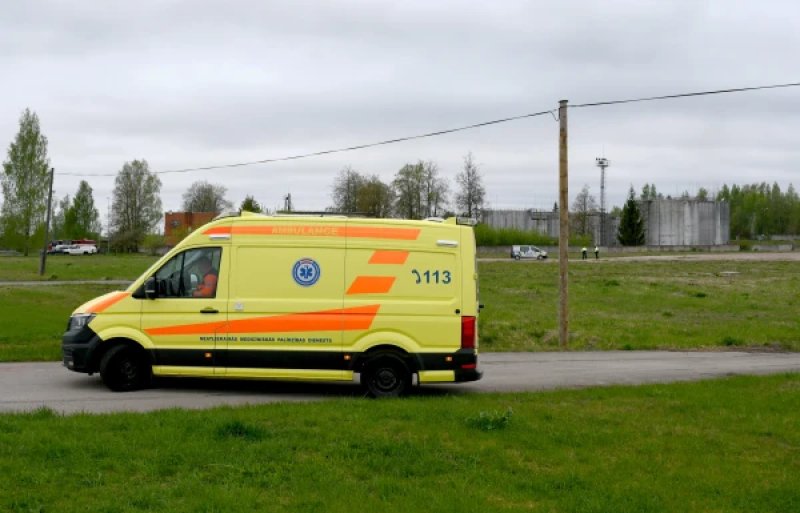
The Emergency Medical Service of Latvia (EMS) has improved its response times to patients. This was reported by the head of the service, Liene Cipule, in an interview with the TV3 program "900 seconds." > "We are indeed seeing an improvement in response times, but that does not mean all problems are solved," she emphasized. According to her, ambulance crews respond to about a thousand calls daily, with the majority occurring in Riga and the surrounding region. Cipule noted that the service is particularly focused on reducing response times. Proposals for changing existing requirements have already been prepared and sent to the Ministry of Health. Despite the improvements, the problem has not been fully resolved yet. One of the main factors slowing down the crews' work remains the long wait times at hospitals. While medical staff are transferring a patient to the emergency department, the ambulance cannot respond to the next call. Another factor is the volume of calls. At the same time, according to Cipule, residents have become better at understanding when it is truly necessary to call an ambulance, which helps to use the service's resources more effectively. For patients, this means that the waiting time for emergency assistance has generally been reduced, but further improvements depend not only on the service's operations but also on the organization of hospital work. The head of the EMS also emphasized that when planning changes in the healthcare system, the impact on emergency medical services must be taken into account. According to her, any reforms should be implemented in a way that does not worsen the response speed to calls. Work on reducing ambulance response times will continue; however, the service believes that solving the problem requires changes not only within the EMS but also throughout the entire patient hospitalization system.