

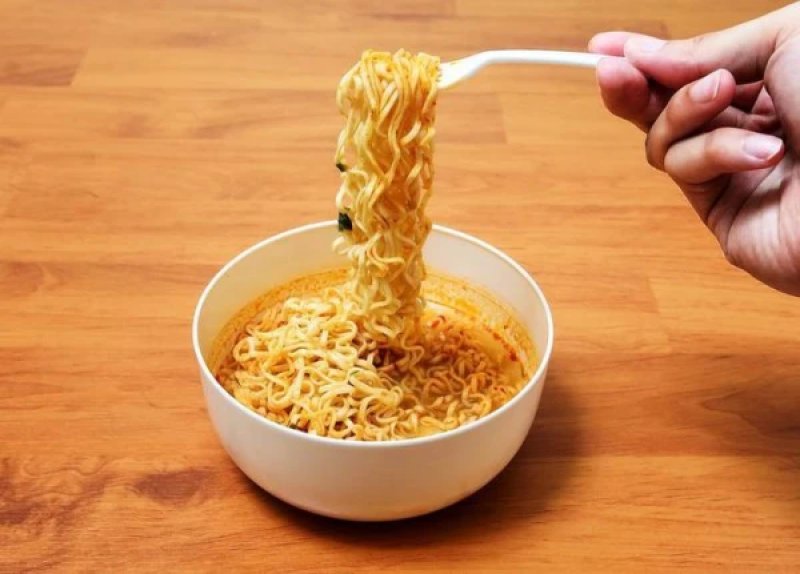
Bb.lv has already [reported](https://bb.lv/statja/ekonomika/2026/06/17/v-populiarnoi-lapse-bystrogo-prigotovleniia-obnaruzili-salmonellu-v-latvii-nacaty-proverki) that contaminated products were sold in retail networks in Latvia. The European Food Safety Authority (EFSA) and the European Centre for Disease Prevention and Control (ECDC) published a risk assessment report noting that children and young people make up the majority of those infected. A total of 106 cases of illness have been registered, with at least 49 people hospitalized. Nine cases have been identified in Estonia, eight of which required hospitalization. Cases of illness have also been reported by Austria, Hungary, Germany, Denmark, Lithuania, the Netherlands, Norway, Poland, the United Kingdom, France, the Czech Republic, and Sweden. Anneli Tuviike, head of the food safety department at the Ministry of Regional Affairs and Agriculture, explained that careful adherence to noodle preparation instructions, maintaining kitchen hygiene, and sufficient thermal processing can help avoid infection. "Consumers will find the cooking instructions on the packaging, so it is important to read the labeling carefully. To reduce risks, we recommend consuming instant noodles as intended, that is, after thermal processing. We also advise checking the batch number on the packaging before consuming Reeva noodles," said Tuviike. In Estonia, salmonella has been found in the following products, which have been recalled from the market: Reeva instant noodles with beef flavor (60 g, batch: L0126, expiration date: 18.04.2027) and Reeva instant noodles with chicken flavor (60 g, batch: L0326, expiration date: 17.06.2027). The Agricultural and Food Department (PTA) notified retail stores about the salmonella-contaminated noodles and required them to remove the products from sale. The department also took additional samples from eleven more batches of Reeva noodles sold on the Estonian market, but no salmonella bacteria were found in them. "Since the contaminated salmonella noodles may still be at consumers' homes, we ask that they do not consume them, but return them to the store or throw them away," said Anastasia Rybakova, a chief specialist in the centralized support and service organization department of the Agricultural and Food Department, emphasizing that the noodles and accompanying seasoning mixes are not intended for consumption in dry or raw form. "When preparing the product, it is necessary to follow the instructions on the packaging: pour boiling water over the noodles and let them steep until ready. This way, the consumer can reduce the risk of illness themselves," emphasized Rybakova.
