

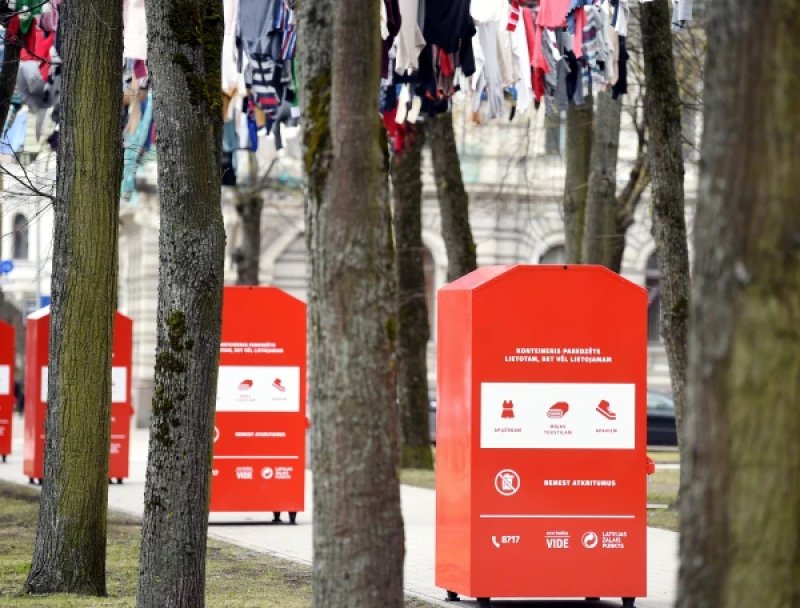
 Foto: BB.LV / Контейнеры для сбора текстиля
These conclusions were made during a discussion organized by *Dienas Bizness* in collaboration with the Latvian Environmental Protection Fund as part of a project on the development of a circular economy. According to the State Environmental Service, just over 17,000 tons of textile products entered the Latvian market in 2025. At the same time, about 5,000 tons were collected, which accounts for approximately 36% of the total volume. Of the collected textiles, around 4,200 tons came through the producer responsibility system, and about 1,500 tons were prepared for reuse. According to Atis Treijs, director of the Waste Management Department of the State Environmental Service, textile recycling remains a complex task. The reason is that modern clothing is often made from several materials, making it technically challenging to turn it into new raw materials. This is why specialists today consider a different approach to be more effective — repairing items, passing them on to new owners, and maximizing their usage lifespan. In fact, textile recycling cannot yet become the primary solution to the problem. Until technologies become more accessible and cheaper, reuse remains the most effective way to reduce waste. At the same time, industry representatives believe that the existing producer responsibility system needs adjustment. According to Kristaps Dreimanis from Eco Baltia vide, the volumes of textile collection have already exceeded the figures initially set when the system was created. If last year around 3,000 tons were collected, this figure has now significantly increased. Experts agree that the further development of the system will depend not only on recycling technologies but also on how actively residents will repair clothing, donate unnecessary items, and choose reuse over purchasing new products.
