

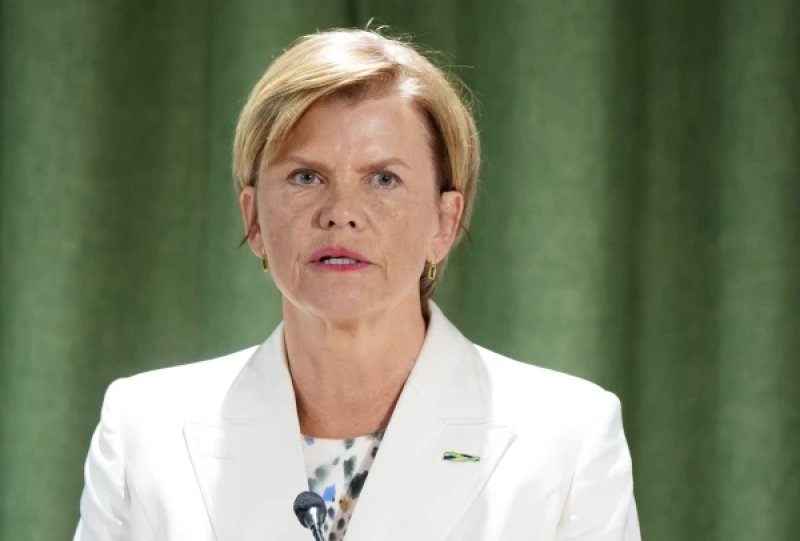
According to the head of the Latvian Ministry of Foreign Affairs, hybrid threats differ from direct military attacks, and therefore their counteraction primarily falls on national authorities and security services. These include cyberattacks, information campaigns, sabotage, corruption schemes, attempts to destabilize society, and the use of illegal migration as a tool of pressure. Braže made this statement after participating in a discussion about Russian hybrid threats at the NATO summit taking place in Ankara. The minister emphasized that while immediate response is the responsibility of individual states, it is crucial for allies to act together. According to her, key roles are played by the exchange of intelligence, cooperation among special services, law enforcement agencies, armed forces, and civilian structures. Such interaction, Braže believes, allows for a unified understanding of threats and a quicker response to Russia's actions. According to the minister, Moscow employs a wide range of non-military methods of pressure. These include information operations, cyberattacks, sabotage, discrediting campaigns, and attempts to influence political processes in NATO countries. Braže noted that one of the goals of such actions is to reduce public support for Ukraine. As an example, she cited claims being spread that the funds allocated to Kyiv should supposedly be directed towards domestic social needs, such as pension payments. "Right now, we see that Russian hostile information operations are aimed at reducing support for Ukraine and attempting to cast doubt on it. For instance, claims are being spread about why spend money on Ukraine when it could be directed towards pension payments," said Braže. Speaking about the situation in Latvia, the minister stated that Russia is exerting pressure on the eastern border by using flows of illegal migrants. According to her, this is a way to test the effectiveness of border protection and the readiness of state structures to respond to such challenges. Although hybrid attacks do not provide grounds for direct military intervention by allies, Braže considers it important for NATO countries to assess such actions equally and perceive them as part of a common strategy of pressure. The minister also advocated for more active participation of partners in securing the alliance's external border. According to her, Latvia would like to see more border guards from allied states so they can familiarize themselves with the situation on the ground and gain practical experience. "We would like to see more border guards from allied countries at our border so they can see the situation with their own eyes, better understand it, and at the same time gain the necessary experience," the minister emphasized. Braže separately highlighted that the responsibility for the defense of Europe is gradually shifting more towards European states. At the same time, she stated that increasing defense spending by European countries does not mean a reduction in the presence of the United States on the continent, but should complement the existing capabilities of NATO. "In 2020, about 80% of the defense budgets of NATO countries were accounted for by states not in the European Union. The situation has significantly changed now: European countries and Canada have substantially increased their defense budgets and capabilities. This does not mean the U.S. is leaving Europe — the United States maintains its presence and potential. However, Europe needs to continue to strengthen its own capabilities," Braže stated. The NATO summit in Ankara continues. Among the main topics of the meeting are support for Ukraine, strengthening the alliance's defense potential, and countering new threats, including hybrid operations.
