

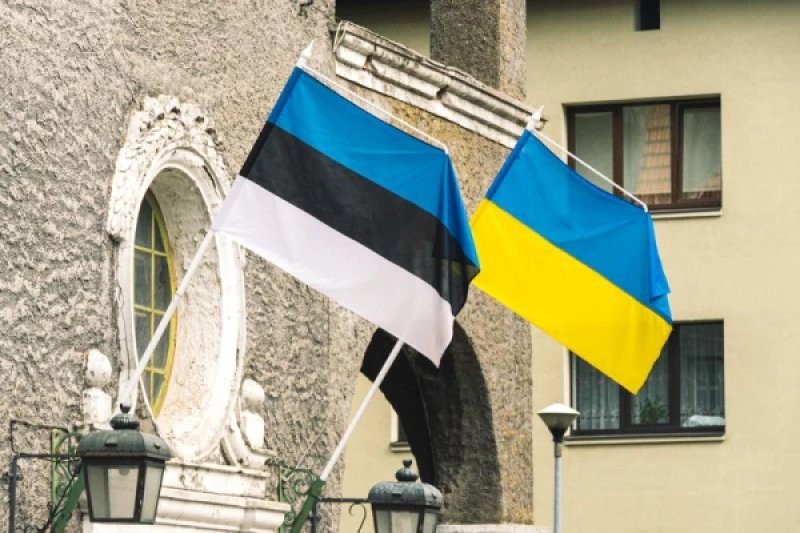
 Foto: BB.LV / Флаги Эстонии и Украины
"In the current security situation, it is impossible to understand decisions aimed at returning aggressor countries to international sports as if nothing has happened," said Minister of Culture Heidi Purga. "As long as the war continues in Ukraine and people are suffering, we cannot allow sports to be used to normalize the situation. Sports are not value-neutral — they always carry a certain message. The question is whether we stand by our principles or yield. Europe's position here must be clear and united: our support should not go to organizations whose decisions contradict our values and responsibilities towards Ukraine," she noted. At Estonia's initiative, a letter will be sent to European Commissioner for Intergenerational Justice, Youth, Culture and Sport Glenn Micallef, calling for the exclusion from European Union funding programs of both the International Olympic Committee (IOC) and several other sports organizations, such as the International Fencing Federation and the International Swimming Federation. It is also proposed to seriously consider limiting the participation of such organizations in future discussions and events related to the development of the sports sector. The IOC Executive Board decided on July 7 in Lausanne to lift the ban on the activities of the Russian Olympic Committee. This creates a basis for allowing Russian and Belarusian athletes to participate in international competitions under the flags and with the symbols of their countries. The teams of both countries have not been able to compete in this way since the start of the war in Ukraine in February 2022. Until now, athletes have mainly had the opportunity to compete under the so-called neutral flag. The next Olympic Games will take place in 2028 in Los Angeles.
