

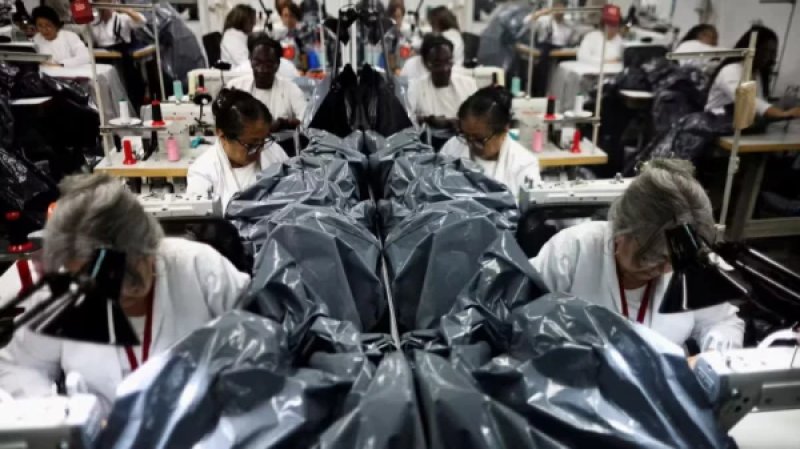
In his workshop in the city of Maracay, Venezuelan designer Efrain Mogollon usually starts his day among sketches of evening gowns and fabrics. However, after the devastating earthquakes that occurred on June 24, the usual work has completely changed, as reported by entrevue.fr. Instead of bright dresses, the employees of the sewing workshop are now sewing black bags for the bodies of the deceased. This decision was made after earthquakes with magnitudes of 7.2 and 7.5 led to the deaths of more than 3,500 people, and the supplies of necessary equipment for rescue services began to rapidly dwindle. Today, large plastic bags with sturdy zippers, adorned with a relief image of Jesus Christ, are being assembled at the sewing machines. "It's a completely different feeling," admits Efrain Mogollon. According to him, despite the heavy emotional burden, he feels a sense of satisfaction that his team can help people in such a tragic moment. The designer stated that he decided to use the capabilities of his enterprise to support those affected, as the humanitarian needs in the country remain enormous. One of the most affected areas has been the city of Catia La Mar in La Guaira state. Rescue operations are still ongoing here, and the destroyed buildings and debris serve as a reminder of the power of the elements. This is where the workshop regularly sends finished bags for the deceased, handing them over to ambulance teams and rescuers. While emergency services continue to clear the rubble and search for survivors, businesses, charities, and volunteers across the country are joining in the efforts to mitigate the consequences of the disaster. The story of Efrain Mogollon's workshop has become an example of how an ordinary business can quickly restructure its work to help people. In the context of a large-scale humanitarian disaster, the sewing production has turned into an important part of the support system for rescue services, demonstrating the strength of civic solidarity in the face of tragedy.