

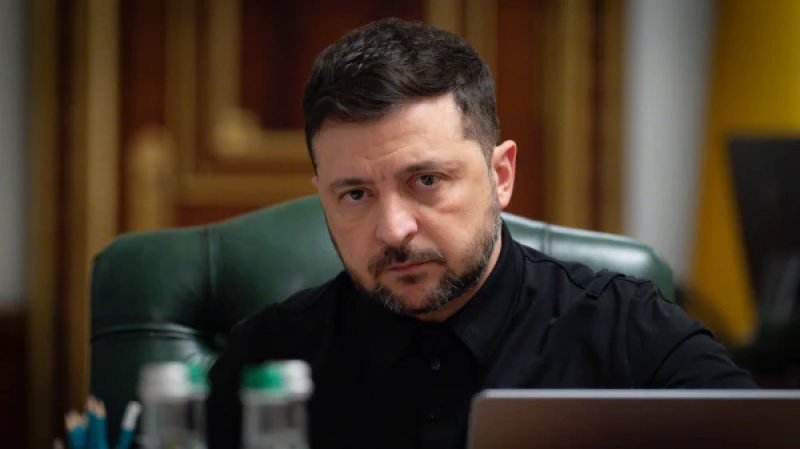
"Today I signed a decree to establish a special command within the Armed Forces — a command for long-range, in fact — global impact on Russia for this war," the head of state said in an evening video address, emphasizing that this command should concentrate all available resources to further significantly reduce the Russian military potential. Zelensky did not name the commander of the new structure but noted that this person "will be strong and certainly as experienced as possible." At the same time, the Ukrainian president signed a decree to create Joint Rapid Response Forces. Brigadier General, Hero of Ukraine Dmitry Voloshin, commander of the 8th Airborne Corps, has been appointed as their commander. "Brigadier General Voloshin is capable of ensuring further development of the potential of the Armed Forces of Ukraine in this direction," Zelensky stated. The creation of the long-range strike command comes against the backdrop of successful Ukrainian strikes on Russian energy infrastructure. According to Energy Intelligence estimates, oil processing volumes in Russia decreased by 25% year-on-year in June — to 3.91 million barrels per day, the lowest level in over 20 years. Since March, Ukrainian drones have attacked oil industry facilities at least 50 times, including all major refineries from the top 10. According to Chris Weafer, head of the consulting firm Macro-Advisory, about a third of Russian refining capacity is currently idle due to the strikes. As reported by Reuters on July 10, citing industry sources, gasoline production in Russia this week fell to 65% of the average summer consumption level due to shutdowns of major refineries — in particular, NORSI, Omsk, and Saratov refineries. According to agency sources, gasoline output has dropped to 75–80 thousand tons per day with domestic consumption around 115–120 thousand tons — the shortfall could reach 40–45 thousand tons per day or about 35%, while in June it was estimated at about 25%, The Moscow Times writes.
