

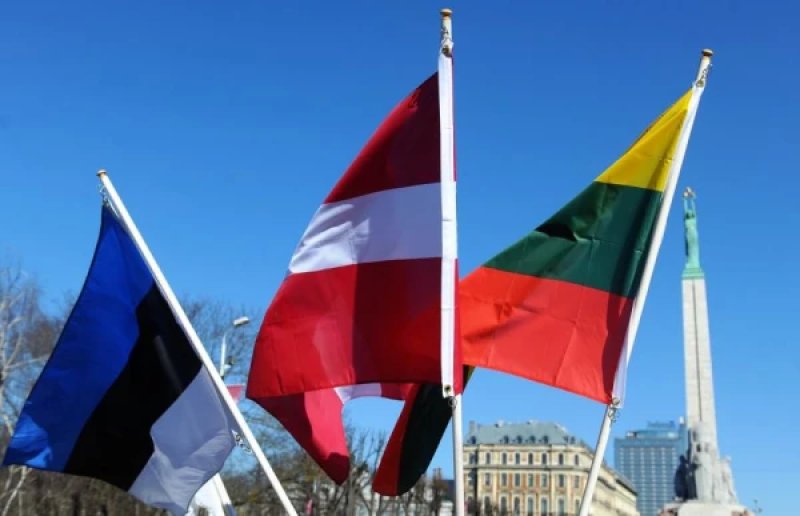
According to an international investigation published on Monday by LRT, the Russian lawsuit is being prepared by the Moscow law firm "Monastyrsky, Zyuba, Stepanov and Partners," which has involved so-called historians linked to the security services in the preparatory work. It is claimed that the lawyers have enlisted the help of Nikolai Mezhevich and Vladimir Simindey, who are referred to in Russia as experts on the Baltic states. According to the investigation, they closely cooperate with the Federal Security Service (FSB) of the Russian Federation, have been spreading anti-Baltic propaganda for many years, and are falsifying the history of these states. Lawyers from the Russian Ministry of Foreign Affairs began preparing the lawsuit against the Baltic states no later than the summer of last year, and they have been gathering legal arguments since the invasion of Ukraine in 2022. Lithuania, like other Baltic states, has already received five notes from the Kremlin since the beginning of Russia's full-scale war against Ukraine. The Russian Foreign Ministry accused the Baltic states, especially Latvia, of sharply increasing pressure on the Russians living there after the start of the Russian invasion of Ukraine, claiming that "Russophobia, cultivated at the state level, has rapidly spread in these countries." The governments of the Baltic states have repeatedly rejected Moscow's accusations of alleged discrimination against their Russian-speaking communities. The Lithuanian Foreign Ministry stated that Russia continues its slanderous campaign in various forms to spread false narratives and accuse Lithuania and other states of allegedly violating their international obligations. Estonia described Moscow's plans to appeal to the ICJ regarding the alleged discrimination of the Russian minority in the Baltic states as part of Russia's disinformation campaign. Russian authorities have accused the Baltic states of assisting Ukraine in carrying out drone strikes on energy facilities in northwestern Russia; however, European governments have dismissed this claim as disinformation. Moscow has also repeatedly threatened — and in the case of Ukraine, attacked — neighboring states, justifying its actions by claiming to "protect" Russians and Russian speakers abroad. Analysts note that Russia has long used propaganda aimed at Russian speakers in the Baltic states — some of whom have poor command of the local languages — to influence public opinion and sow discord.
