

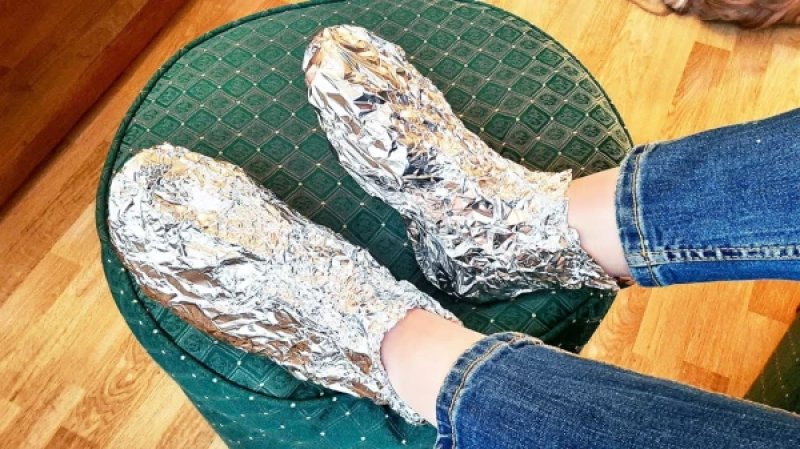
Have you ever looked at a roll of aluminum foil and thought that it could be useful for more than just cooking? Usually, we use this shiny silver foil to cover leftovers or to bake chicken for Sunday dinner. However, in recent years, it has quietly gained a reputation as an unexpected "secret weapon" among home remedy enthusiasts. From reducing inflammation to protecting against winter cold — wrapping legs in foil is considered an ancient method that is once again gaining popularity among advocates of natural healing. The logic behind this unusual practice is based on the principles of thermoregulation and local heat therapy. Aluminum foil acts as an insulator, reflecting some of the body's natural heat back to the skin instead of allowing it to dissipate quickly into the surrounding air. This is why many believe that this method helps warm the legs, reduce discomfort after a long day, and improve overall well-being. Although it may look quite unusual from the outside, the supposed effect is explained by simple laws of physics. Proponents of the method claim that wrapping the feet in aluminum foil can reduce muscle pain, improve circulation, warm the legs, alleviate cold symptoms, and even reduce inflammation. There are many publications online where this method is referred to as a simple and accessible home remedy for various ailments. However, it is important to understand that many of these claims lack convincing scientific evidence. To date, there are no quality clinical studies that confirm that wrapping the feet in aluminum foil treats colds, improves circulation, reduces inflammation, or alleviates muscle pain more effectively than a regular warming compress. There is also no evidence that foil has any specific therapeutic effect on the body. Most of these recommendations are spread on websites dedicated to folk medicine and are not supported by medical organizations. At the same time, there is indeed a certain effect from this method. If you wrap your legs in foil over or under socks, aluminum does reflect some heat back to the body. As a result, the legs may feel warmer, especially in cold weather. However, this is not about a healing effect, but rather about simple heat retention due to insulation. For most healthy individuals, short-term use of aluminum foil on unbroken skin poses no serious danger. Nevertheless, specialists do not recommend applying foil to open wounds, burns, or damaged skin, wrapping the legs too tightly to avoid disrupting circulation, or using this method instead of consulting a doctor when experiencing a high fever, severe pain, or other serious symptoms of illness. "To date, there is no scientific evidence that wrapping the legs in aluminum foil helps treat colds, inflammation, or pain. If someone feels warmer, it is related to heat retention properties, not the healing properties of aluminum itself," experts note. Thus, despite the widespread popularity of this home remedy, it should be approached with caution. Aluminum foil can indeed help retain heat in the legs, making them more comfortable in cold weather. However, claims that it treats colds, reduces inflammation, improves circulation, or has other pronounced health benefits are not supported by modern science. Therefore, this method should be viewed more as an unusual variant of a warming compress rather than a full-fledged treatment.