

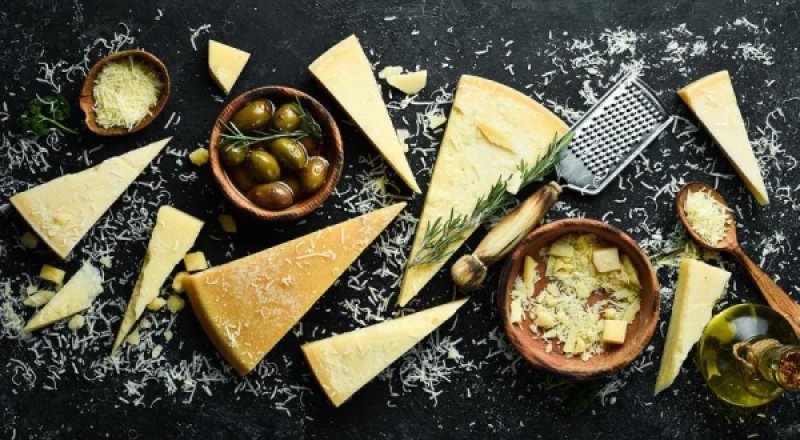
According to the product protection consortium, the established 40-degree heat in the production regions has a direct impact on the dairy cattle population. Animals, being in a state of heat stress, noticeably lose their appetite, leading to a decrease in daily milk yields by an average of 10%. This, in turn, creates a serious imbalance in the supply chain of raw materials needed for cheese production, as approximately 550 liters of milk are required to produce one wheel of Parmesan. **Impact of Climate** The situation is exacerbated by a prolonged drought affecting the northern regions of Italy, where five provinces are authorized to produce cheese with protected designation of origin. A key requirement for the raw material is that the milk must come from cows that are fed exclusively on fresh grass and hay grown in this area. Due to a critical lack of precipitation, farmers are finding it increasingly difficult to stockpile feed in sufficient quantities. To save the grass harvest, farmers are forced to actively use artificial irrigation systems. This leads to a significant increase in electricity costs, which also hits producers' pockets. The difficulties are not limited to the milk production stage. The aging process of Parmigiano Reggiano, which lasts from 12 to 36 months or more, requires strict adherence to climate conditions in storage facilities. Any fluctuations in temperature and humidity can negatively affect the quality and taste of the product. The operator of the specialized warehouses Magazzini Generali delle Tagliate reports that during the height of summer heat, energy consumption at storage facilities has increased by approximately 30%. This is due to the necessity of round-the-clock operation of air conditioning and ventilation systems to maintain a stable microclimate, which imposes additional financial obligations on producers. **Economic Risks** Industry experts warn that if the trend of rising summer temperatures continues, it could result in a long-term decrease not only in volumes but also in the qualitative characteristics of milk, as well as an overall decline in production. A scenario of rising wholesale prices for finished products is also quite likely. Producers operate under strict quality standards, and any additional costs increase the production cost of cheese. The economic significance of Parmigiano Reggiano for Italy is hard to overestimate. The annual turnover of the entire industry is estimated at €4.5 billion. The largest importer of Italian cheese remains the United States. Recognizing the seriousness of the situation, the European Commission previously approved a support program for producers of traditional cheeses. Italy was allocated €12 million for these purposes. However, observers estimate that this funding may be insufficient to compensate for systemic risks associated with climate change. In the long term, significant investments will be required to adapt the agricultural sector to the new climate realities to preserve the production of the famous cheese.