

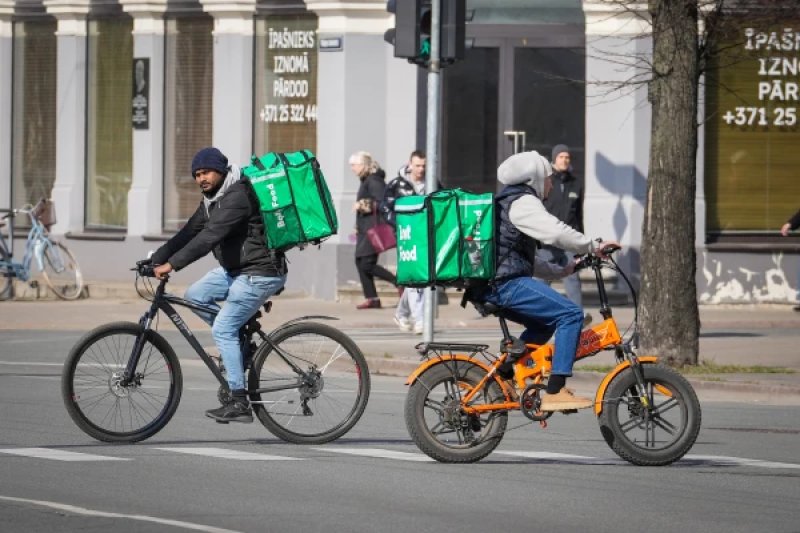
## Everything has changed in four years If we compare the previous election campaign in the Saeima with the current one, one striking difference stands out: four years ago, politicians did not talk or hardly mentioned the need to limit migration from third countries. No one particularly frightened themselves and the voters with the existential danger of migration, that is, the idea that the influx of migrants threatens the very existence of the Latvian nation and statehood! Does this mean that politicians have become enlightened over the past four years? No! The political agenda and public sentiment have simply changed significantly. Let’s remember that the last elections took place just six months after the start of the full-scale war in Ukraine. In one part of society, there was confusion, in another – fear, and in a third – even anger. It is clear that politicians had to respond to the situation. Experts still believe that the incredible success of “New Unity” in the October 2022 elections, which secured 26 mandates, is “due” to the war – the leaders of “New Unity” skillfully exploited the fears and desire for stability and predictability that arose in society. At that time, this political force clearly captured the sentiments of a significant portion of voters and hit the mark. Other right-wing forces, meanwhile, launched even harsher rhetoric towards Russian speakers. And it all worked! Today, as the war in Ukraine enters its fifth year, politicians understand perfectly well that mere anti-Russian and even anti-Russian rhetoric is clearly insufficient to gain political points and mobilize the same nationally-minded electorate. Of course, one can still use the “Russian question” during this election campaign, but rather in a targeted, episodic, and even somewhat petty manner – for example, it is amusing to observe how prominent figures from the National Alliance like Puntulis, Ratnieks, and their ally Abolins are fighting against the sign at the Russian theater in Old Riga. They say, let the theater continue to stage performances in Russian, but we will not allow the original title of the play to be written in Cyrillic on the poster! ## More and more outsiders However, overall, without abandoning the emphasis on the “Russian question,” the ideologists of the National Alliance have realized that nationally (and not only!) minded Latvians are more concerned not about signs in Russian and the fact that 37 percent of the population have not abandoned their native language, but about the obvious increase in the number of migrants from third-world countries. And the fact that such growth exists and is significant is evident even without official statistics – just look at the center of Riga and the now capital microdistricts. If we turn to statistics, in 2022, the total number of holders of temporary and permanent residence permits was 109,443 people, while at the end of last year it was already 127,809 people. At the same time, it is difficult to determine how many citizens of third countries with residence permits in another EU country enter Latvia through the internal border of the European Union. Plus, there are illegal immigrants. It should be noted that the leaders of the National Alliance, understanding that if they delay, competitors will seize this topic, have quite briskly taken up the “migration issue.” The current Minister of the Interior, Janis Dombrava, even initiated the creation of a special parliamentary commission on migration. Ironically, now Dombrava, as a minister, will have to implement the recommendations he himself provided while working in the parliamentary investigative commission. ## Quotas and other restrictions By the way, at the upcoming Cabinet meeting, a government action plan is set to be approved, which includes issues of migration limitation. Here’s what is planned to be done before the elections, that is, by October 3: * “1) Proposals have been prepared and presented for a draft law amending the Immigration Law to establish a requirement for proficiency in the Latvian language (at least at level A2) for foreign citizens studying in Latvia for at least two years. * 2) A draft law has been submitted to the Saeima amending the Law on Higher Education Institutions with stricter accountability for universities regarding invited students. * 3) Amendments have been made to the Cabinet of Ministers regulations of October 10, 2006, No. 846 “Regulations on the requirements, criteria, and procedures for admission to educational programs and state support for citizens who voluntarily declare themselves to the state defense service and have completed it” by establishing requirements for an entrance SAT test or an equivalent entrance test for the main education of foreign citizens.” * They also want to “implement measures from the ‘control plan for citizens of third countries in Latvia,’ included in the information report ‘on improving the legal regulation of the stay of citizens of third countries in Latvia.’ * This plan also includes the introduction of quotas, that is, the maximum allowable number of temporary residence permits issued per year. However, first, it is necessary to make the corresponding changes to the Immigration Law, which was returned by the president to the Saeima for revision, meaning it has not yet come into force.