

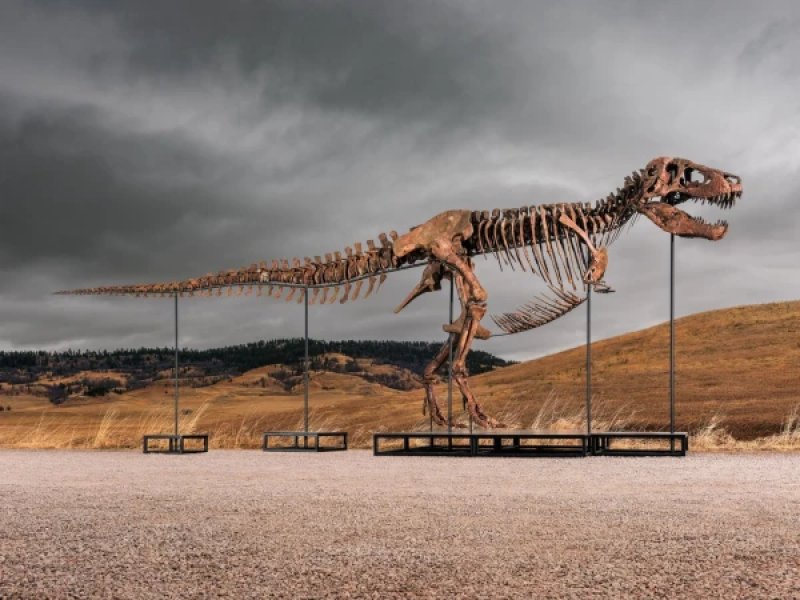
 Foto: BB.LV / Скелет тираннозавра ушел с молотка за рекордные 50 миллионов долларов
The skeleton of a Tyrannosaurus rex nicknamed Gus has become the most expensive paleontological specimen ever sold at auction. At Sotheby's, it was sold for $50.1 million, surpassing the previous record set in 2024 when the skeleton of the stegosaurus Apex was sold for $44.6 million. The age of the find is estimated to be about 67 million years. The remains were discovered during excavations at a ranch in South Dakota, USA, conducted from 2021 to 2023. The length of the skeleton is approximately 11.6 meters, and its height is 3.8 meters. It includes 183 bone elements and is about 63% complete, making Gus one of the most complete known specimens of Tyrannosaurus rex. The dinosaur was named after the former ranch owner Gary 'Gus' Liking, on whose property the remains were found. Experts note that such a high price reflects the growing interest of collectors in museum-quality fossils. Today, such finds are increasingly viewed as objects comparable in value to contemporary art, rare watches, or sports memorabilia. At the same time, record prices raise concerns among many paleontologists. They believe that when unique fossils end up in private collections, the scientific community loses the opportunity to study such finds comprehensively. Furthermore, the rapid increase in value makes such exhibits practically inaccessible to museums. Sotheby's does not fully agree with this criticism. The auction house's vice chairman and head of the science and natural history department, Cassandra Hatton, emphasized that the excavation of Gus was conducted according to all scientific requirements, and the remains were thoroughly documented and preserved. She also reminded that the previous record holder—the skeleton of the stegosaurus Apex, acquired by billionaire Ken Griffin—was subsequently loaned to the American Museum of Natural History in New York for long-term display. ...The sale of Gus has set a new benchmark for the market of rare fossils and has once again raised the question of where unique testimonies of Earth's history should be stored—in private collections or in museums accessible to scientists and the general public.
