

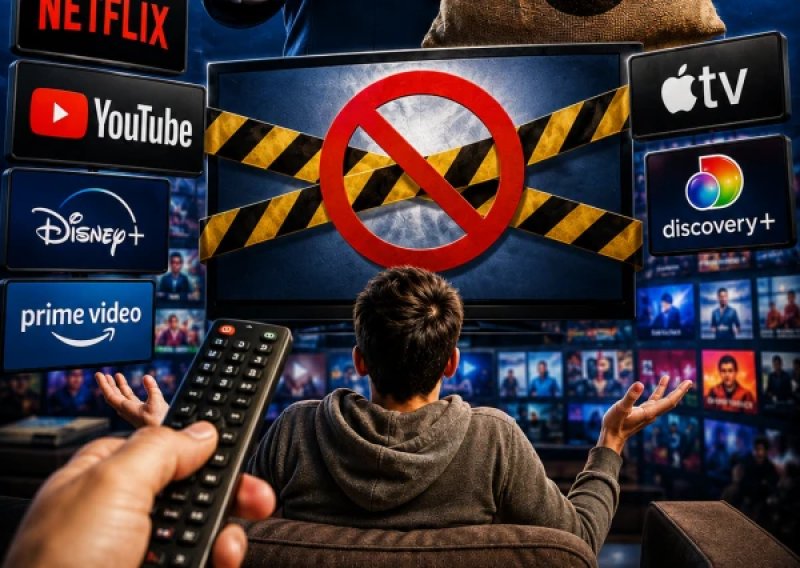
## Don’t Forget to Throw Away the TV In the past, owning a color "box" was iconic – your author, 35 years ago, upon returning with a sum of money after working as a migrant in the Netherlands, first bought a heavy "Rubin" at a commercial price. And a video player from a thrift store. Freedom was intoxicating! But nowadays, it’s not like it used to be. "I don’t have a TV at home," you hear more often from acquaintances, even those who are not particularly young. Your author has been without cable for over a year now, although LTV and a few other channels have mysteriously remained, and sometimes it’s even amusing to observe the parallel reality constructed by national broadcasting. ## "Under the Jurisdiction of Latvia" The Ministry of Culture, led by Nauris Puntulis (National Alliance), has decided that it is necessary to "oblige electronic media providing audiovisual services in Latvia upon request... to contribute financially to the creation of audiovisual works in Europe." Now the authorities are reaping the consequences of their own COVID panic – from 2019 to 2021, due to various bans, cinema attendance fell by 60%. In Latvia, the number of people watching films online has increased by a third. Even our very small audience is being targeted by about 80 companies from EU countries offering quality films and shows for a subscription fee (usually small). In addition, the ban on Russian – and generally Russian-speaking – television, which washed over Latvia since spring 2022, has essentially failed. Thanks to the spread of the Telegram messenger, "sanctioned" content is viewed uncontrollably literally from one’s own pocket. Moreover, the YouTube platform offers extensive opportunities. But the state is not idle. Since local authorities cannot influence the products of, say, Konstantin Ernst, they are taking on what the West produces. "For global audiovisual service providers to operate in the European Union," the Ministry of Culture reminds, "they need to submit an application in some EU country..." In our case, all these giants – Netflix, Apple TV, Amazon Prime, Discovery, Disney – are "under the jurisdiction of Latvia!" ## Foreigners Have Forgotten About Culture The National Council for Electronic Media, whose former head Ivars Abolins is now one of the leaders of the National Alliance's election list (who would doubt it), and until the elections is, so to speak, on hold, serving as the parliamentary secretary of the Ministry of Culture, has even developed special "guidelines" titled: "Instruction for Identifying On-Demand Audiovisual Electronic Media Services." Because the situation is quite complicated. These foreigners, "thanks to algorithmic audience formation, largely determine the trends in audiovisual content consumption in Latvia; however, their goal is profit, and they are not bound by the tasks of Latvian cultural policy and media policy." And indeed, "the goals of Latvia's cultural policy are to promote the creation and ensure the accessibility of quality modern audiovisual content in the Latvian language, as well as to provide the general public with materials that strengthen national identity and accustom the younger generation to consuming national content." ## Share with the State Indeed, what does YouTube think about our country when its annual advertising budget is around $40 billion? Meanwhile, Latvia's total state revenues for the same period amount to only 16 billion euros and some change. "These service providers, who also operate and earn income in Latvia, do not invest in content created in Latvia," the Latvian Ministry of Culture denounces American capitalists. Thus, N. Puntulis's department, creatively applying EU directives, wants to put foreign giants in a position to choose: either they make "direct contributions to content creation," or they make "contributions to state funds." ## Received Advertising? Share! At a Cabinet meeting, amendments to the Electronic Media Law were already discussed, from which they want to obtain money. And not a small amount – 3.5% of the revenues earned by foreigners in Latvia. Interestingly, local media bureaucrats are also targeting those foreign companies that operate through commercial advertising while showing their products for free to viewers. "The obligation to make a financial contribution to the production of European audiovisual works created in Latvia in the Latvian language," is apparently intended to inspire monsters of international business. By the way, there are already many burdens for foreigners in Latvia. When launching their broadcasts in the country, they are required to: * Mark the age audience of their broadcasts at their own expense; * Enter into contracts and pay royalties to copyright protection organizations AKKA/LAA, LaMPA; * Pay an annual "supervision fee" – over 6500 euros. And now something completely unimaginable is being created. As stated in the annotation from the Ministry of Culture: "This obligation to make a financial contribution is not part of the general taxation system but represents an independent and separate tool for financing cultural content support. In particular, the planned collection has its own targeted purpose and is not dependent on any other existing tax regimes or collection systems in Latvia." ## Any Whim of Ours – at Your Expense! Recently, a truly global hit was produced in our country – the animated "Stream," which managed to do without any language at all. One would think that this is the way out – we need art that unites! But no, now this example has served as a reason for the initiators of the amendments to demand that foreign companies also finance such films in Latvia, where no language is involved... By January 1, 2027, foreigners will be calculated how much they owe Latvia, retroactively, based on their activities over the last three years. And the minimum amount has been set at 300,000 euros. Any whim of ours – at your expense!