

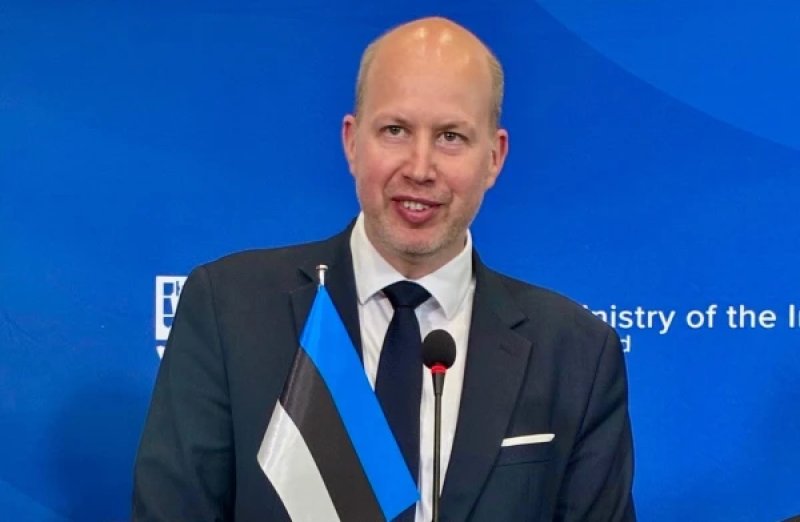
 Foto: BB.LV / Игорь Таро
According to Taro, Estonia does not consider attempts to limit the issuance of tourist visas to Russian citizens hopeless, despite the fact that some EU countries continue to issue them. The minister noted that Tallinn's consistent position has already influenced the discussion within the European Union and the approach of the European Commission. He reminded that Estonia stopped issuing tourist visas to Russians immediately after the start of the full-scale war in Ukraine. Moreover, the country does not allow entry to holders of tourist Schengen visas issued by other states. According to the minister, such travelers are denied entry both at the land border and at airports. "You cannot come to the Christmas market in Tallinn while your country is bombing Ukraine," Taro explained the position of the Estonian authorities. The minister stated that Estonia regularly raises the issue of visa policy at meetings of EU interior ministers. According to him, according to last year's data from the "Schengen Barometer," almost half a million visas were issued to Russian citizens in just eight months, which raised concerns in Tallinn. In Taro's opinion, the rhetoric of countries that continue to issue visas to Russians has changed. While they previously openly defended their position, they now more often emphasize that they conduct an individual assessment of each visa application. The Interior Minister also advocated for the inclusion of all individuals involved in Russia's aggression against Ukraine in the European-wide Schengen blacklist. According to him, Estonia has already included thousands of people in it, and the initiative has been supported by Latvia, Lithuania, the Czech Republic, Finland, Sweden, and Poland. At the same time, the minister believes that the scale should be significantly larger. In his estimation, the list should include not thousands or even hundreds of thousands of people, but over a million. According to Taro, EU countries are currently discussing not the idea of restrictions for participants in Russian aggression itself, but the most suitable legal mechanism for implementing such a decision.
