

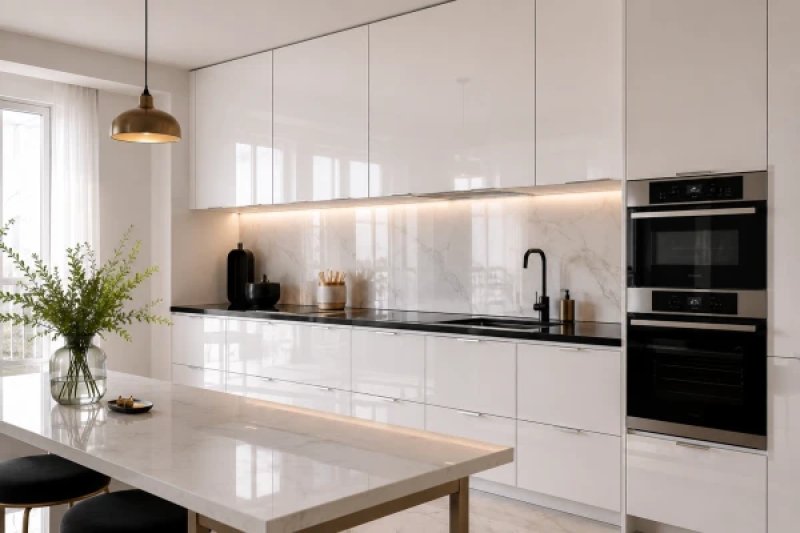
Experts have named seven popular elements that are already considered outdated and are gradually disappearing from modern interiors. First of all, we are talking about glossy facades. Not long ago, they were associated with luxury, but today they look too cold and faceless. Instead, designers recommend using natural wood, textured plaster, and stone with expressive texture. The dark blue kitchen island is also becoming a thing of the past. Once considered a striking accent, it has become so widespread that it has lost its originality. Currently, warm natural shades are in vogue — muted green, mushroom tones, plum, and calm neutral colors. Hoods are also changing. Massive rectangular structures are being replaced by models with smooth lines made of plaster or drywall. They look lighter and fit more organically into the interior. Another anti-trend is black matte hardware. Instead, experts recommend choosing warmer metals: polished nickel, satin or untreated brass. Such details make the kitchen more elegant and maintain relevance for many years. Classic white tiles for the kitchen backsplash are gradually losing popularity as well. Designers suggest replacing them with handmade ceramics, natural stone, or solid panels with expressive texture. Continuous rows of upper cabinets from wall to wall are also considered outdated. To make the interior look lighter, specialists advise combining closed storage systems with glass facades or open shelves. Designers also recommend abandoning completely monochromatic kitchens. Instead of an interior done in one color, they suggest combining different materials — wood, stone, painted facades, and metal. This approach makes the space more lively, deep, and cozy. The main trend of 2026 is individuality. The modern kitchen should look not perfectly "catalog-like," but warm, comfortable, and reflective of the owners' character. That is why natural materials, complex textures, and a combination of different shades are gradually displacing uniform and overly strict solutions.