

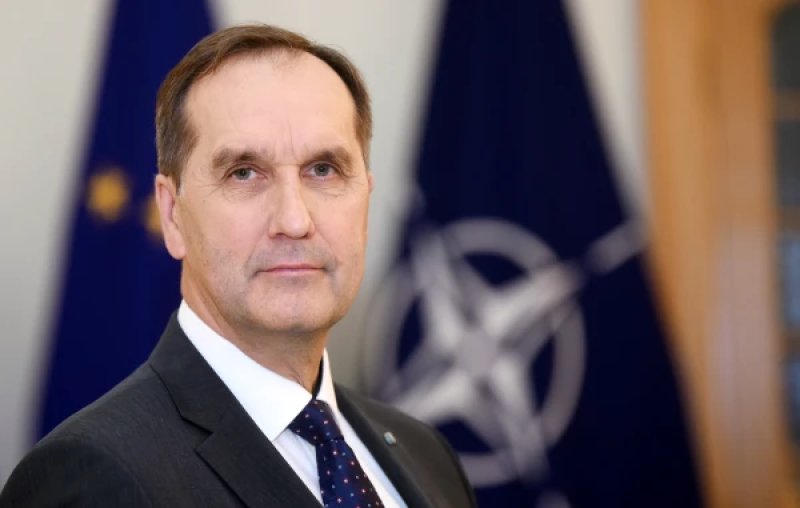
Therefore, scenarios of escalation are mentioned more frequently lately: "It is calculated where Russia might be able to test NATO's unity, which is why the Baltic region, Poland, Svalbard (Spitsbergen), Gotland are mentioned..." However, as M. Riekstins emphasized, "NATO essentially works this way, especially military planners, developing military defense plans, assessing various scenarios, even the most incredible ones, and trying to find answers to what the right counteraction would be in case of such scenarios." "Let’s put it this way, I think that Russia is not that insane, although there is madness in Russia... to attack a NATO member state in a classical, conventional manner. At this moment, NATO does not see any indicators of a classical military threat. Could this change? You know, anything can change in the world, but at this moment, I do not see such a threat to NATO. What Russia could indeed attempt, and what we cannot exclude or can assume with greater probability, is a threat related to some provocations, to some acts of sabotage. This is where we need to be vigilant." "We see that Russia will be a long-term threat," Mr. Riekstins states. "This genie out of the bottle, which has been released in Russia for years, igniting intolerance in society against the outside world, against different opinions, against neighbors, obviously there was fertile ground in Russian society for these emotions to develop negatively. How to put this genie back in the bottle, like those soldiers who are now returning to Russian society from the war in Ukraine and who have actually committed crimes?" The ambassador also explained that the North Atlantic Alliance deliberately does not reveal all its cards. "I understand that residents would like to know exactly when NATO acts and how it will act, but we need to understand that this is a conscious uncertainty threshold so that the opponent does not know all the plans. It is precisely calculated so that the opponent cannot calculate and strike just below that threshold." The Latvian Ministry of Defense, for its part, must set priorities: "If you have as many resources as there are, then you need to try to establish priorities - will it pay off, for example, to maintain mobile units on our eastern borders in such a large volume in a 24/7 mode to cover all airspace, not knowing when this drone might come to us."
