

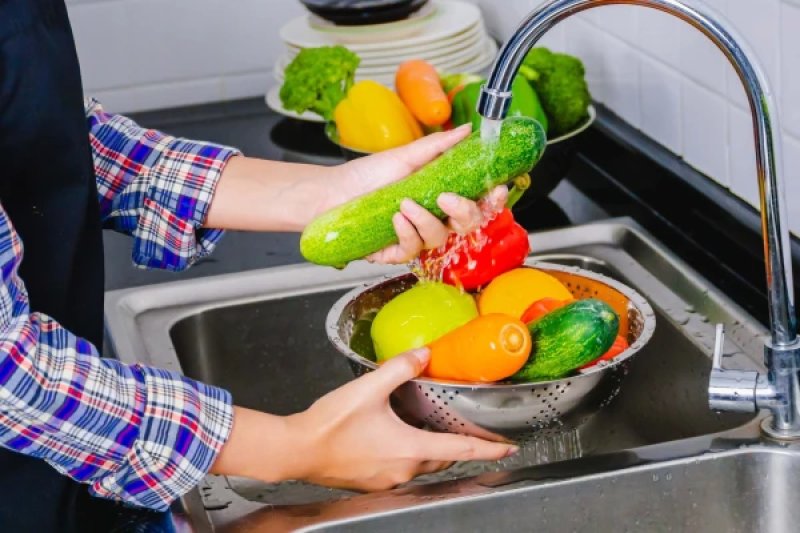
Many people try to thoroughly wash fresh vegetables and fruits not only to remove dirt and soil residues but also to get rid of possible pesticide traces. There are many tips online: use baking soda, vinegar, or special washing agents for produce. However, experts believe that such methods are often unnecessary, https://www.huffpost.com/entry/the-1-thing-thatll-wash-pesticides-off-fruits-and-vegetables-g_l_6a4d28abe4b0a7adb6d7af86?origin=article-bottom2-life Huffpost. ### What to worry about Pesticides can indeed pose health risks, but much depends on their type and quantity. According to toxicologist Kelly Johnson-Arbor, some substances can negatively affect the nervous system, while others are associated with an increased risk of cancer or hormonal system disruption. At the same time, specialists emphasize that the exact doses at which health risks arise are not always known. The U.S. Environmental Protection Agency notes that people usually consume such small amounts of pesticides through food that they do not pose a threat. ### What to wash fruits and vegetables with Experts recommend using plain running water as the best means for washing produce. This method is recommended by both the Centers for Disease Control and Prevention (CDC) and the Food and Drug Administration (FDA). They do not advise using vinegar, special detergents, or other solutions. ### Why soap should not be used Fruits and vegetables have a porous structure and can absorb foreign substances. Therefore, specialists do not recommend washing them with soap, household cleaning agents, or special compositions for fruits and vegetables. The safety of such agents is not fully confirmed, and their residues can enter the product even after thorough rinsing. ### Do not soak produce Another common mistake is prolonged soaking. Although it seems that this method helps to clean produce better, specialists warn that bacteria can spread even more actively in standing water. Additionally, after washing, it is not recommended to place vegetables and fruits directly in the kitchen sink, which often turns out to be one of the dirtiest places in the kitchen. ### Which products require special attention Berries should be rinsed especially carefully to avoid damaging them. Leafy vegetables are better separated into individual leaves and rinsed separately. Vegetables and fruits with a rough surface — such as melons, watermelons, or cauliflower — should preferably be cleaned with a soft brush. Even products with thick skins, which are usually not eaten, need to be thoroughly washed. During cutting, bacteria and contaminants from the surface can transfer to the edible part of the fruit. ### A brush makes washing more effective Experts advise not to limit oneself to just a stream of water. Gently rubbing with hands or using a clean brush helps to better remove dirt, microorganisms, and some pesticide residues. At the same time, the brush itself should be washed regularly. ### Organic products — additional protection If possible, specialists recommend choosing organic vegetables and fruits. According to organic farming rules, synthetic pesticides are not used in their cultivation. However, even such products need to be thoroughly washed before consumption. Experts agree that for most vegetables and fruits, plain running water and careful mechanical cleaning are sufficient. Soap, vinegar, and trendy produce washing agents not only do not provide noticeable advantages but can, in some cases, cause more harm than good.