

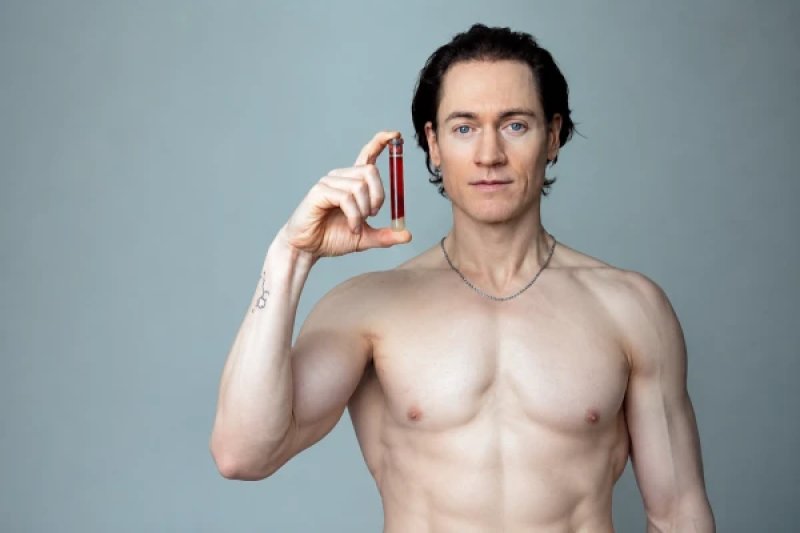
48-year-old entrepreneur Brian Johnson, known for his expensive experiments in life extension, announced on social media platform X that he has created his own clone. According to Johnson, this is not yet a full-fledged human, but a cell model grown in laboratory conditions. > “I just cloned myself. With this clone, I can test new treatment methods, take organs for transplantation, and develop new recovery methods. This little Brian is currently living in a Petri dish. For some, this may seem like a frightening dystopian future, for others — an inevitable future of healthcare,” he wrote.  The businessman explained that he decided to take this step after being diagnosed with an autoimmune disease. > “As cells age, they accumulate errors that lead to malfunctions in the body and diseases. This technology gives us the opportunity to reverse aging. An incurable disease has become one of the best things that has happened to me in a long time. It has opened new possibilities for body recovery. This is the first example,” Johnson stated. In the early 2000s, Brian Johnson founded the payment system **Braintree**, which was later acquired by **eBay** for $800 million. After selling the business, he focused on research in life extension and biohacking. Today, the entrepreneur spends about **$2 million** annually on maintaining his health. His condition is monitored by a team of 30 doctors. Johnson previously mentioned that he even transfused himself with plasma from his 17-year-old son in hopes of slowing down aging, but later admitted that this procedure did not yield the expected results. Recently, the biohacker [reported](https://bb.lv/statja/lifenews/2026/07/07/millioner-mectavsii-pobedit-starenie-priznalsia-v-tiazelom-diagnoze-moi-zeludok-poziraet-sam-sebia) that he has been diagnosed with autoimmune gastritis — a condition in which the immune system attacks the cells of the stomach lining. Despite the diagnosis, he has not given up on his goal of living over a hundred years. After announcing his illness, Johnson stated that he hopes to live at least until the age of 106. The idea of using clones to grow organs has long been present in science fiction. The most famous work on this topic is the novel by Nobel Prize-winning author Kazuo Ishiguro, “Never Let Me Go,” as well as the film adaptation, where clones are created specifically for organ donation. Brian Johnson's statement has once again sparked a heated discussion about the future of biotechnology. The entrepreneur himself believes that such developments will help extend human life, but ethical and safety concerns regarding such technologies remain subjects of lively scientific debate.