

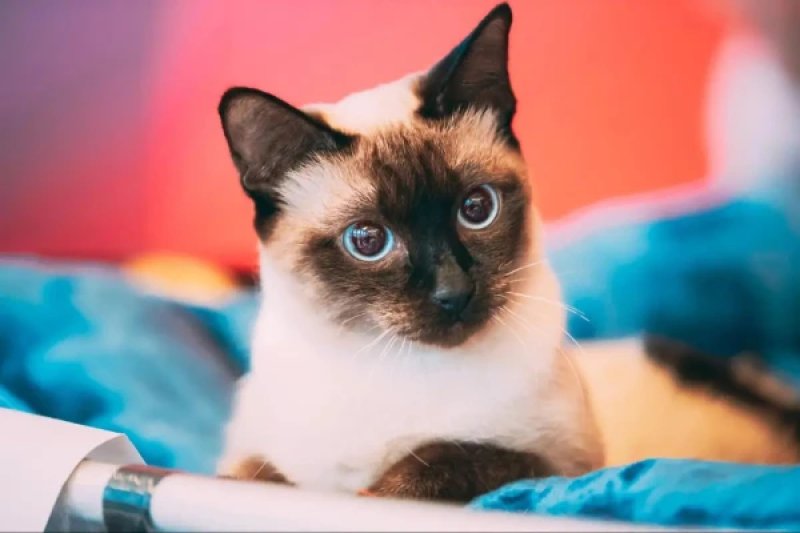
Family relationships in the world of cats are astonishing. Two kittens born on the same day can have the same mother but different fathers. How is this possible, and is it dangerous for the future offspring? Veterinarian Lydia Lisichkina explains: A cat can indeed carry a litter from multiple males. In veterinary reproductive biology, this is called superfecundation. The basis lies in the unique feature of ovulation in cats. These animals are induced ovulators with a reflex release of LH (luteinizing hormone). What does this mean in simpler terms? In cats, the release of a mature egg from the ovary (ovulation) does not occur on its own according to a calendar but only in response to mating. They do not have a menstrual cycle like humans or monkeys. There are several factors under which a cat can give birth to kittens from different fathers. **Polyclicity of Estrus** If a cat does not become pregnant, the interestrus (the pause between estrus cycles) lasts on average 8–10 days. However, during the peak mating season, ovulation can occur in waves. **Multiple Ovulation** In response to copulation and vaginal stimulation, there is a release of LH, and within 24–48 hours, ovulation of several oocytes—female sex cells—occurs. And ovulation is not always synchronized for all follicles. In simple terms, several "houses" for eggs (follicles) mature in the ovaries at the same time, but they develop at different rates. **Viability of Sperm and Oocytes** Sperm retains fertility for 24–48 hours after mating, and according to some data, even longer. Oocytes remain viable for about 24 hours after ovulation. **Time Window** If mating with the first male occurs, a cascade of ovulation is triggered, but some follicles have not yet ruptured. If mating with another male occurs within the next 24–48 hours, the oocytes from the second wave of ovulation can be fertilized by the sperm of the second male. For this to happen, the cat must have access to different males for 24-72 hours. This means she either lives outdoors, resides in a house with unneutered males, or is free-roaming and can find a partner herself. **Consequences and Risks** For the embryos, there is no significant difference in gestation periods—the age difference between embryos usually does not exceed 1–3 days. Therefore, physiologically, the pregnancy proceeds as usual. However, kittens from different fathers can radically differ in color, coat length, and blood type. This is a classic case where a stray cat gives birth to kittens of British type, Oriental type, and ordinary striped ones simultaneously. However, there is a risk of the most dangerous consequence. If the kittens from father A have blood type A (dominant), and the kittens from father B have blood type B and are born from a mother with blood type B, then the kittens with blood type A will receive anti-A antibodies from the colostrum and will die within the first days of life. In a litter with different fathers, there can simultaneously be kittens of blood type A (at risk) and blood type B (safe). **Getting Pregnant Again** There is also a phenomenon in cats called superfetation. This is the fertilization and implantation of a new egg against the backdrop of an already developing pregnancy. Normally, after the implantation of the embryo and the formation of the corpus luteum, the progesterone background blocks estrous behavior and ovulation. This means that the animal cannot get pregnant again during pregnancy. Superfetation is only possible when this mechanism fails. For example, this can occur against a background of hormonal disruption. The corpus luteum is a temporary endocrine gland that forms in the cat's ovaries immediately after ovulation. Its main task is to produce progesterone, which prepares the uterus for embryo implantation and supports pregnancy in the first weeks. If there is too little progesterone, new follicles mature in the ovaries against the background of a pregnant uterus (day 15–25), and then ovulation occurs. In some cats, especially those living in groups, or with polycystic ovary syndrome, spontaneous ovulation can occur without mating, meaning without copulation or mechanical stimulation. **Cesarean Section for Cats** Superfetation can be very dangerous. If the second batch of embryos is 3-5 weeks younger than the first, the difference in gestation can lead to dire consequences. If the second batch does not develop in time for the first batch's birth, the uterus begins to expel the full-term kittens. In this case, the cervix opens, and a miscarriage of the preterm kittens occurs. Or, worse, they remain in the uterus and mummify, which is very dangerous for the cat's health. In the worst-case scenario, the entire litter can die. Therefore, when a veterinarian sees embryos with a significant difference in gestation on an ultrasound, they will recommend a cesarean section at the gestation age of the older batch of embryos with the removal of the preterm ones. Natural birth in this case will almost certainly lead to severe complications.