

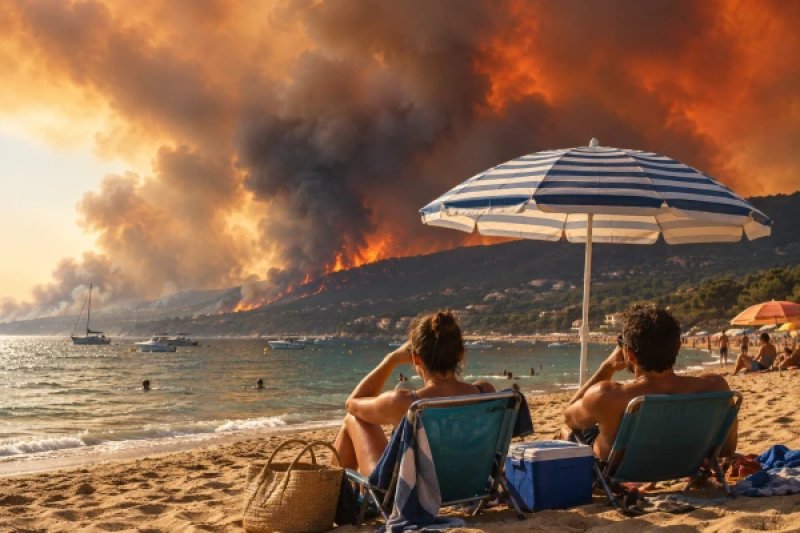
The summer of 2026 once again shows how quickly the situation can change during travel. Massive wildfires continue not only in France and Spain but also in Algeria, Morocco, Tunisia, and Canada. According to Reuters and The Independent, more than **300,000 people** have already been evacuated in France and Spain, including local residents and tourists. In France, authorities do not rule out a complete evacuation of Bordeaux, and the country's Prime Minister, Sébastien Lecornu, stated that the fires have reached an "unprecedented level." The army, aviation, and assistance from other European Union countries have been mobilized to combat the disaster. In Spain, the regional president of Madrid, Isabel Díaz Ayuso, called the situation "the worst fire in the region's history." According to her, the situation has been exacerbated by extreme heat, strong winds, and the merging of several fire outbreaks. ### Which Areas to Avoid for Now In Spain, tourists are advised to refrain from traveling through the affected areas of the provinces of Madrid and Ávila. In France, the most challenging situation has developed in the Gironde department — in the areas of Saumos, Le Porge, and Lège-Cap-Ferret, as well as in the Landes department, including Biscarrosse and its surroundings. Local authorities warn that roads may close without prior notice, and access to certain areas may be completely restricted. ### What This Means for Tourists Even if your resort is far from the fire outbreaks, wildfires can affect your vacation. Road closures, cancellation of excursions, disruptions in transportation, and temporary closures of natural parks and attractions are possible. Additionally, smoke can degrade air quality for tens and even hundreds of kilometers from the fire site. ### How to Stay Safe Before traveling to France, Spain, or North African countries, experts recommend: * monitoring official messages from local authorities and rescue services; * avoiding areas where fires are raging; * regularly checking road conditions and wildfire maps; * following all instructions from rescue services and not ignoring evacuation announcements; * saving the emergency service numbers of the country you are heading to. Those planning to travel through France, Spain, or cross the border into Gibraltar are also advised to check the current information on road conditions and restrictions along their route in advance. At the same time, experts emphasize that most popular resorts continue to operate as usual, so there is no need to cancel vacations en masse. The main thing is to closely monitor the situation and be prepared to adjust your route if necessary. Wildfires are becoming one of the main threats to the summer tourist season in Europe. When planning a vacation, it is important not only to choose a destination but also to regularly monitor warnings from local authorities. Being informed and following recommendations will help make your trip safe even in emergency conditions.