

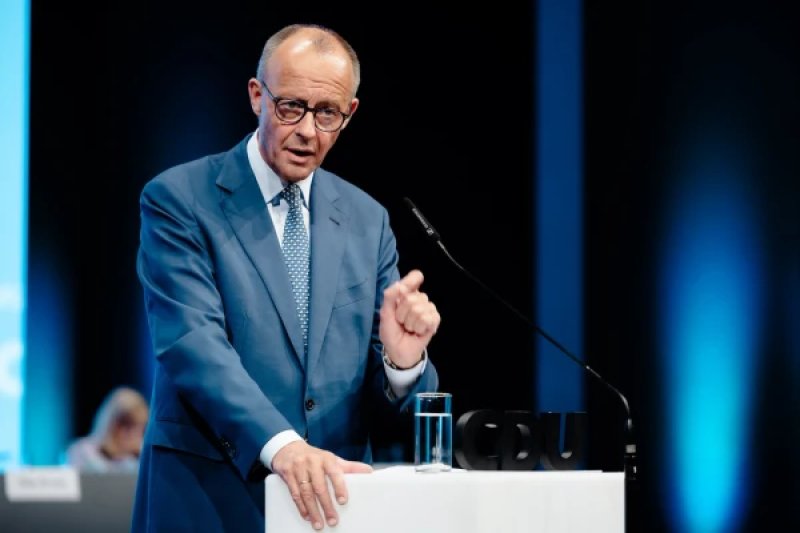
Chancellor of Germany Friedrich Merz is attempting to pull the government out of a political crisis through cabinet reshuffles. Four out of eight changes were formalized today. In his official residence, the Bellevue Palace in Berlin, President Frank-Walter Steinmeier presented reappointment certificates to three cabinet members. Former Health Minister Nina Warken (CDU) will head the Chancellor's Office. Her position will be taken by the current CDU General Secretary Carsten Linnemann. Steffen Bilger (CDU) will further lead the Ministry of Transport. The current head of the Chancellor's Office, Thorsten Frei (CDU), has been dismissed. He will become the leader of the faction in the Bundestag, replacing Jens Spahn. The vote is expected to take place today. However, for Merz himself, the work is essentially just beginning: he will have to focus on himself. Support among his party colleagues is weakening. This particularly concerns the chairman of the CDU branch in Bremen, Heiko Strohmann. "I wouldn’t say the situation is catastrophic. But things are heading in that direction," he told the Tagesspiegel newspaper, adding: "Many members are dissatisfied with the Chancellor." According to Strohmann, Merz is not particularly strong in rallying his party members: "He does not explain his policies sufficiently," the interviewee clarified to the German publication. "I hope that during his vacation, Friedrich Merz will find time for self-reflection," Strohmann concluded, calling the idea of changing the Chancellor of Germany "complete nonsense." As sources in the CDU told the FAZ newspaper, the mood in the party is "pessimistic." Merz's behavior during the dismissal of Transport Minister Patrick Schnieder (CDU) is characterized as "ugly" and "undignified." ## ## Söder Calls for Calm and Speaks of "Temporary Turbulence" Just last Thursday, Merz informed Schnieder that he intended to dismiss him. However, due to the last-minute refusal of the designated successor to take the position, Merz did not announce the planned reshuffle for several days. Due to media reports about the prolonged search for a new transport minister, Schnieder, as Bild reports, felt publicly humiliated. On Sunday, according to the publication, he himself asked Merz to resign. Schnieder's brother, Gordon Schnieder - the Prime Minister of the state of Rhineland-Palatinate - understandably expressed his solidarity with him. After Schnieder's departure, his faction in the state parliament sent Merz a letter notifying him of the cancellation of a scheduled meeting. As a reason, the deputies cited a lack of mutual trust and respect. The leader of the SPD faction, Matthias Mirsch, on the contrary, hopes that calm will return to the CDU/CSU bloc. According to Mirsch, Merz's personnel reshuffles in the government, faction, and party did not harm the black-red coalition, he stated on RTL and n-tv. "The Chancellor himself admitted that he envisioned this process differently," Mirsch continued. "In this regard, I believe that from today the situation will indeed calm down, and we need to return to important work." CSU leader Markus Söder also spoke of "temporary turbulence." Nevertheless, he could not resist a jab at Merz: "On behalf of the CSU, I want to say: we are still the same, we have an excellent team, three strong federal ministers, we remain a team, it has proven itself very well," Söder's words were reported by Tagesschau. The impetus for the large-scale personnel reshuffles was the fatherhood of former CDU faction leader Jens Spahn. Spahn and his partner welcomed a child through a surrogate mother in the USA. Prior to this, Spahn had opposed surrogacy in Germany. After Merz demanded that he step down, Spahn ultimately resigned.