

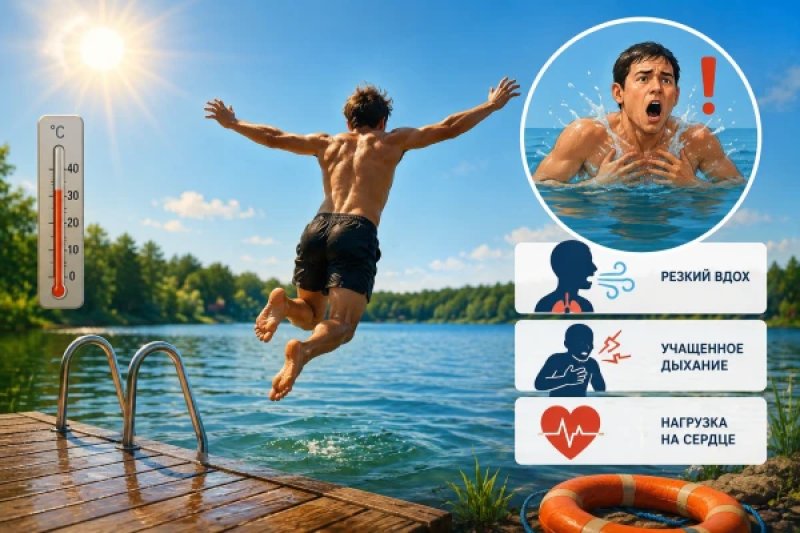
Even when it’s scorching outside, the water in natural bodies of water often remains significantly colder than the air. This is because water heats up much more slowly. According to Zachary Schlader, a professor of kinesiology at Indiana University, the temperature of the air and water can vary greatly, even after several hot days in a row. This sharp drop in temperature can trigger what is known as the "cold shock response." The body reacts to sudden cold with an involuntary gasp, rapid breathing, and sometimes even heart rhythm disturbances. The danger lies in the fact that a person can inhale water within the first few seconds after jumping in. Experts note that such a reaction can occur even at water temperatures around 25 degrees Celsius. Moreover, drowning can happen in just a few minutes — the danger is not the cold water itself, but the immediate physiological reaction of the body to the sudden cooling. The risk increases with dehydration, which often occurs during hot weather. A lack of fluids reduces blood volume, causing the heart to work harder. According to emergency physician Ryan Marino, this can amplify the negative effects of cold shock on the cardiovascular system. People with heart conditions and circulation disorders should be especially cautious. Specialists advise against jumping straight into the water after being in the sun. It is safer to enter gradually, first wetting the feet, hands, neck, or wrists, allowing the body to adapt to the water temperature and keeping breathing under control. Additionally, in hot weather, it is important to drink water regularly and avoid excessive consumption of alcohol, sugary, and highly caffeinated beverages, which can contribute to dehydration. According to experts, swimming remains one of the effective ways to cool down quickly during heat, but it should be done cautiously. Gradual immersion in water helps avoid dangerous bodily reactions and reduces the risk of accidents.