

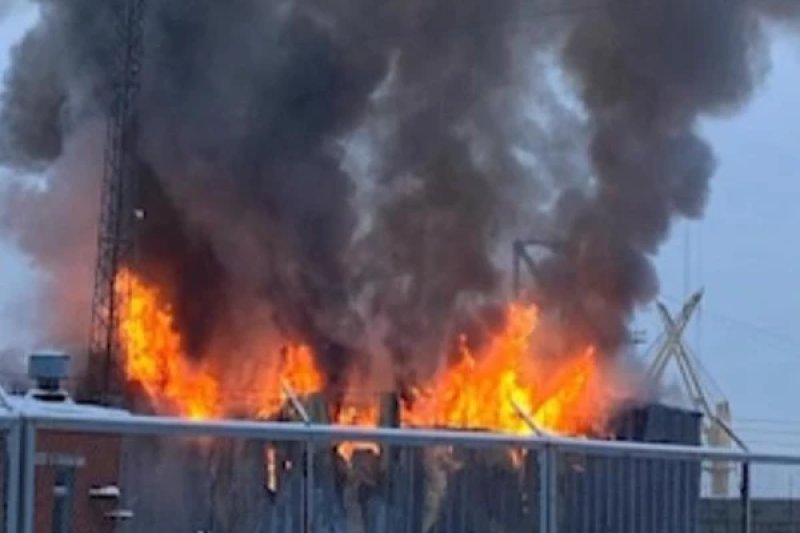
The wars in Iran and Ukraine are increasingly intersecting and simultaneously expanding, engulfing more countries – even those that declare neutrality. This is reported by Fortune, analyzing the consequences of the "megaconflict." Recently, Ukraine attacked an Iranian cargo ship transporting military goods between Iran and Russia across the Caspian Sea. A few days later, Iranian drones attacked tankers carrying liquefied natural gas in a port on the Mediterranean coast of Egypt, marking the first instance of an attack on the country during the war with Iran. As noted by Dan Alamariu, chief geopolitical strategist at Alpine Macro, the attack in the Mediterranean may affect gas prices in Europe, shipping rates, and insurance costs. This occurred against the backdrop of Iran's demands for European countries to hold Ukraine accountable for the attack on the ship in the Caspian Sea. "The wars between Iran and Ukraine may be interconnected. The strike by Ukraine in the Caspian Sea was followed a few days later by the ignition of gas carriers in the Mediterranean. This may not be a coincidence; there is a risk of the two conflicts converging," the expert warned. **Ukraine in the Middle East Conflict** Iran expert Hamidreza Azizi outlined several possible reasons for Ukraine's strike on the Iranian vessel. One of them is that Ukraine wants to demonstrate its value as a partner to the U.S. Another viewpoint is that Israel and the U.S. asked Ukraine to exert pressure on Iran on their behalf, fearing that any attacks on Iranian infrastructure would provoke retaliatory measures against their regional economic assets. The third interpretation is that Ukraine's attack was a response to threats from Houthi rebels to vessels in the Bab-el-Mandeb Strait. The Financial Times also believes that Ukraine's strike could have been a warning that the Iranian coast of the Caspian Sea is at risk and could be used as leverage in negotiations with the U.S. Former U.S. Secretary of Defense Mark Esper, who served in Trump's first administration, previously argued that the war with Iran should be internationalized, involving America's allies in Asia and Europe, as well as countries bordering Iran, such as Turkey, Armenia, and Azerbaijan. Energy expert Daniel Yergin, vice chairman of S&P Global, also stated that the war with Iran is expanding geographically and geopolitically. "Think about all the seas – the Persian Gulf, the Red Sea, the Mediterranean Sea, the Black Sea, the Baltic Sea, the Caspian Sea – all of them have become arenas of the oil war," he said, as reported by UNIAN.