

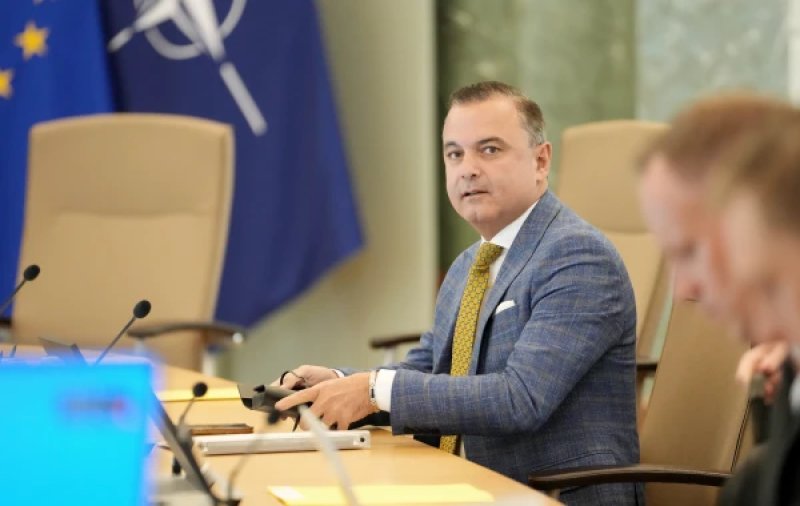
As reported to the LETA agency by the Ministry of Health, on Monday, Hossam Abu Meri met with the chairman of the Balvi County Council, Janis Trupovnieks, to discuss specific solutions to strengthen the accessibility of medical care for residents of the Balvi and Gulbene regions. During the meeting, the parties discussed the decision to merge the hospitals in Balvi and Gulbene to cease providing obstetric care starting September 1, as well as possible options for maintaining necessary medical services for the residents of the region. The Minister of Health urged the hospital management to reconsider the decision and continue providing the service. As a result of the negotiations, the parties agreed to continue close cooperation and to develop a pilot project for organizing family health care in the region by September. Its goal is to increase the accessibility of medical care for women, ensure quality monitoring of pregnant women, develop pediatric services, and enhance the primary health care system. Additionally, Trupovnieks proposed that the Ministry of Health grant the merged hospitals of Balvi and Gulbene the status of a regional hospital until the special funding model for medical institutions in the eastern border area comes into effect. The organization of a day gynecological hospital and outpatient services, the opening of a midwife's office, monitoring of pregnant women, and further development of children's health care were also discussed. Abu Meri emphasized that government bodies and local authorities must jointly seek solutions that allow residents to continue receiving necessary medical services as close to their place of residence as possible. This is why a new model of medical care is planned to be created in the Balvi region, with special attention given to the health of women, pregnant women, and children. The minister identified patient safety and the quality of medical care as the main priority. The Ministry of Health noted that together with the National Health Service, they are ready to implement solutions with the local government and medical institution that will ensure continuous accessibility of medical care in the region while simultaneously developing the most demanded services by the population. The ministry also reported that regardless of the future of the maternity ward at the Balvi hospital, a midwife will continue to be on duty in the emergency department around the clock to respond promptly to emergencies if necessary. After the meeting with the minister, the chairman of the Balvi Council, Janis Trupovnieks, wrote on Facebook that the dialogue with the Ministry of Health regarding the future of the merged hospitals of Balvi and Gulbene, the accessibility of medical care in the region, and the possible launch of a pilot project has been ongoing since March, but so far no clear and understandable solution has been proposed. According to the head of the municipality, the decisions of the Cabinet of Ministers regarding the reform of the hospital network should have been made simultaneously with the launch of a clearly developed pilot project for the eastern border area and the merger of the hospitals in Balvi and Gulbene. He also emphasized that maintaining the status of a regional hospital is fundamentally important, as it is a necessary condition for ensuring quality medical care and attracting specialists to the region. Trupovnieks reported that special attention was given during the negotiations to attracting and retaining qualified medical personnel. According to the municipality, the level of the hospital, the range of services provided, and working conditions directly affect specialists' willingness to work in the region. The municipality intends to continue negotiations with the Ministry of Health. As previously reported, the issue of the future operation of the maternity ward in Balvi has been discussed for several years. Last year, the merged hospitals of Balvi and Gulbene recorded 140 births, and the management of the institution had already stated the need to assess the prospects for maintaining this service. The Ministry of Health reminds that ensuring safe obstetric care is critically dependent on a sufficient number of births and the constant availability of experienced specialists. With a low number of births, the risks to patient safety and the sustainability of the service significantly increase. According to the ministry's assessment, to ensure patient safety, reduce the risk of complications, maternal and perinatal mortality, readiness for emergencies, and economically efficient organization of births, a medical institution must handle at least 500 births per year. The management of the Balvi hospital links the decision to cease providing obstetric care starting September 1 with the reform of the hospital network prepared by the Ministry of Health. However, the ministry emphasizes that this decision is not related to the changes provided for in the reform. Last week, the government approved the changes in the organization and payment of medical care developed by the Ministry of Health, which will come into effect in 2027. They provide for a transition to a three-tier hospital system, defining the role, responsibility, and service profile of each medical institution, as well as strengthening cooperation between hospitals. The Ministry of Health particularly emphasizes that round-the-clock access to emergency medical care will be maintained throughout Latvia seven days a week. The reform is based on the principle that a patient should receive the necessary assistance in the right place, at the right time, and of the appropriate quality while maintaining the availability of emergency medical care across the country. According to the reform, the Balvi hospital will function as a local hospital with expanded access to specialists. Given the geographical location of the institution and its significance for residents of the border region, the list of specialists in Balvi will be broader than in other hospitals of the same level, the Ministry of Health previously explained. In turn, the Union of Greens and Farmers has called for the reform to be canceled, believing that it could significantly worsen the ability of residents in the regions to receive necessary medical care in a timely manner. The Ministry of Health hopes to maintain obstetric care in Balvi and promises support for the development of medical services in the region. However, local authorities insist that without a clear plan and the preservation of the status of a regional hospital, it will be extremely difficult to ensure accessible and quality medicine in eastern Latvia.