

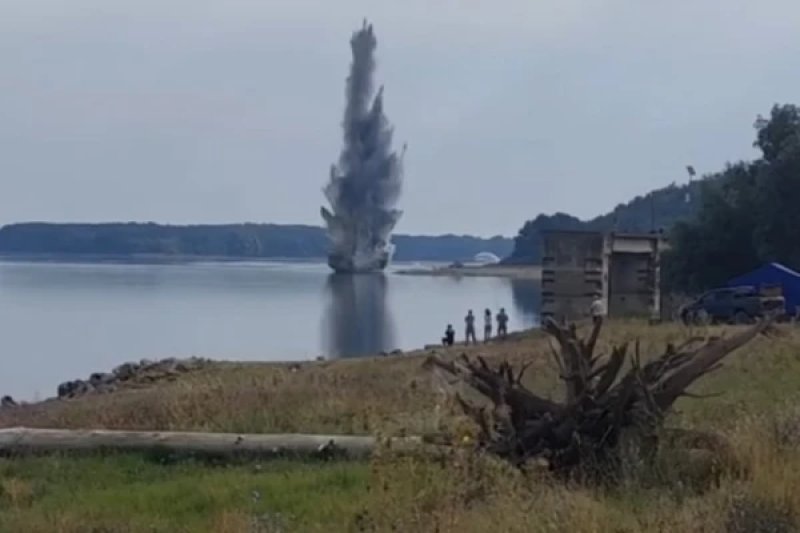
Romanian authorities have begun explosive work in the shallow sections of the Danube to provide the Cernavodă nuclear power plant with sufficient cooling water. After blasting the rock formations, the fragments are dumped from barges about 50 kilometers downstream — into a branch of the Danube, from which water flows to the nuclear power plant's cooling system. It is expected that this will raise the water level in the area of the plant's intake. Currently, only about a third of the usual volume of water for this time of year is flowing through the Danube, and meteorologists predict further declines in the river's level. Due to the shallowing of the Danube, the Cernavodă nuclear power plant has been operating at reduced capacity since last week. If the ongoing work does not yield the expected results, the plant will have to be shut down on Thursday. Under normal conditions, it provides about 20% of all electricity consumed in Romania. Problems due to the record low level of the Danube have also arisen in neighboring Hungary. There is also a risk of shutting down the nuclear power plant in Paks. Although Prime Minister Péter Márki-Zay previously mentioned the possibility of shutting down the plant, its operation has been extended for now. According to the latest data, the nuclear power plant will be able to continue generating electricity at least today, and possibly tomorrow. The ongoing drought and shallowing of the Danube are already beginning to affect the energy security of countries in the region. If the water level continues to decline, restrictions on the operation of nuclear power plants could become a new serious problem for Central Europe.