

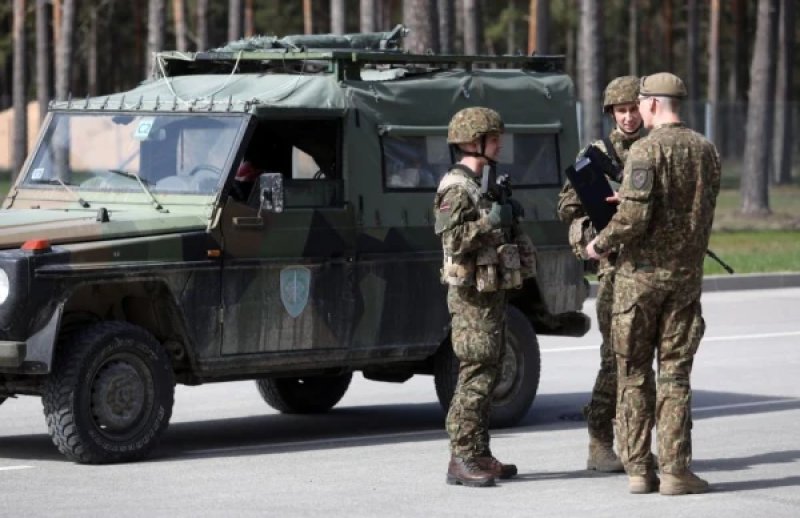
Poland, Latvia, Lithuania, and Estonia are becoming a model for NATO's new defense strategy. This conclusion is contained in a publication by Newsweek, dedicated to how countries bordering Russia are building their national security systems. The author of the article, investigative journalist Juliette Bretton, notes that these states have focused not only on increasing military spending but also on preparing society for possible crises. According to her, Eastern European countries began to change their approach to security significantly earlier than most Western European states. The impetus came from the cyberattack on Estonia in 2007, the Russia-Georgia war in 2008, and Russia's annexation of Crimea in 2014. After these events, Poland and the Baltic states accelerated the modernization of their armies, strengthened cyber defense, and began to restore mandatory military service. In Latvia and Lithuania, conscription was reinstated years after it was abolished, and Lithuania recently reported a record number of volunteers. Preparation, in the author's opinion, is not limited to the military. In the Baltic states, the concept of comprehensive national defense is developing, which involves preparing not only the military but also the civilian population. Young people are being trained in the use of modern technologies, including drones, cybersecurity exercises are being conducted, and hospitals are preparing to operate in potential emergency situations. At the same time, Poland and the Baltic states are strengthening NATO's eastern flank. Defensive structures, including bunkers, engineering fortifications, and anti-tank barriers, are being built in border areas. Poland is also implementing the "Eastern Shield" project aimed at enhancing border protection with Belarus and Russia's Kaliningrad region. The author of the article believes that after the end of the Cold War, many Western European countries underestimated security threats, viewing Russia more as a partner. As a result, the size of armies in several countries decreased significantly, and many abandoned mandatory military service, primarily relying on NATO's collective defense and U.S. support. At the same time, Newsweek notes that Poland and the Baltic states have adhered to a different approach. After joining NATO, they consistently modernized their armed forces, invested in defense, and sought to strengthen the collective security guarantees provided by Article 5 of the North Atlantic Treaty. Particular attention in the publication is given to energy security. Lithuania is cited as an example, as it was one of the first in Europe to completely abandon Russian gas supplies after building a liquefied natural gas terminal. According to the author, it is this comprehensive approach—a combination of a strong army, resilient infrastructure, cybersecurity, and population preparedness—that today forms a new model of NATO defense, which could serve as a benchmark for other alliance countries.