

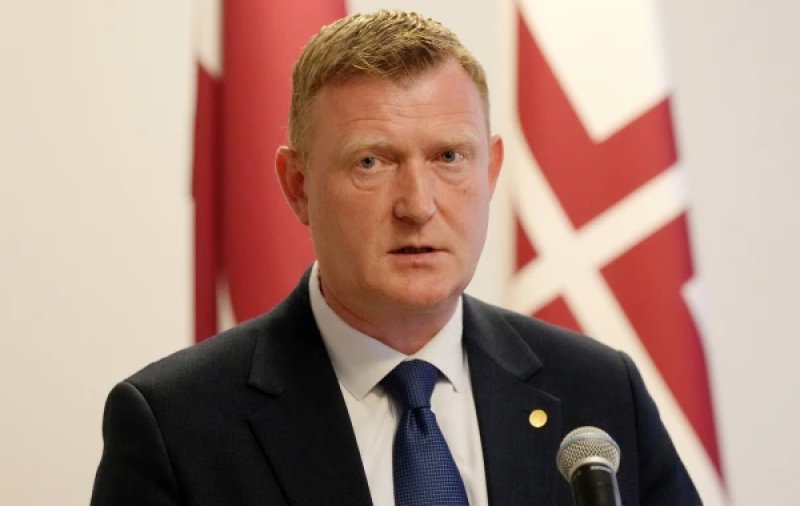
The Ministry of Defense of Latvia has currently not identified any signs of preparations for attacks on specific critical infrastructure objects in the country. This was stated by the Minister of Defense of Latvia, Raivis Melnis, during a broadcast on Latvian Radio. Commenting on the statement from the Lithuanian side that Russia is considering the possibility of striking critical infrastructure objects in the Baltic states using Ukrainian drones, the minister noted that all major facilities are under constant surveillance, and state services, together with their owners and operators, have a comprehensive response plan in case of threats. "We do not have any direct signs of a threat regarding specific objects — the Riga airport, the railway, or other facilities — that would require me today to order the National Armed Forces to intervene immediately. We are analyzing all types of potential threats together with the special services and making decisions based on their assessments. To date, the main challenge remains the state border," the minister emphasized. Melnis reminded that the Ministry of Defense has repeatedly warned that Russian aggression and various provocations could occur at any moment, so Latvia continues to prepare for various scenarios of events. According to the minister, following the statement from the Lithuanian special services, Latvian security services will likely intensify joint information analysis with their Lithuanian colleagues and present their findings to the Minister of Defense, the Minister of the Interior, and the President of the country. The minister also emphasized that the protection of the airport and other critical infrastructure objects is ensured not only by special security plans but also through regular exercises. If necessary, the National Armed Forces will be able to switch to enhanced security for these objects. The LETA agency has not yet been able to obtain comments from the Constitutional Protection Bureau, the State Security Service, the Ministry of Defense, and the National Armed Forces regarding the statement from the Lithuanian side. Earlier, the Lithuanian portal 15min.lt reported, citing data from Lithuania's military intelligence, that Russia is considering the possibility of striking the critical infrastructure of the Baltic states using drones produced in Ukraine. Lithuanian Minister of Defense Roberts Kauns confirmed the existence of such information. "We have data indicating that Russia is considering the possibility of unconventional kinetic attacks on critical infrastructure objects in the Baltic states. Most likely, drones produced in Ukraine could be used for this purpose," the minister stated. At the same time, no information about the alleged targets or possible timelines for such attacks has been disclosed. According to the Lithuanian side's assessment, Russia may use captured Ukrainian drones to conceal the true source of the attack and subsequently deny its involvement in the attack on NATO territory. In recent years, military drones have repeatedly appeared in the airspace of NATO countries. Initially, it was assumed that Russian forces were using electronic warfare means to change the course of Ukrainian drones detected in European Union countries. However, there is now growing confidence among security service representatives that Moscow is intentionally directing Ukrainian drones toward Lithuania, Latvia, Estonia, Poland, and Finland. Leaders of Eastern NATO countries recently publicly stated that they have intelligence information about Russia's preparations for kinetic provocations on the territory of these countries. Lithuanian President Gitanas Nausėda had previously warned that the country's key transport and energy facilities could become targets for both traditional attacks and sabotage. Since June 18, the Lithuanian army has been supporting the Public Security Service in guarding the liquefied natural gas terminal in Klaipeda, the LitPol Link electricity connection between Lithuania and Poland in Alytus, a transformer substation in the Alytus region, and the Kruonis Pumped Storage Power Plant. On July 17, the Minister of Defense of Lithuania signed an order to extend the enhanced security of these facilities until August 19. To carry out this task, the army allocated a unit of up to 30 servicemen with transport, as well as a ship or boat with a crew. According to Lithuanian sources, possible plans by Moscow to organize such provocations may be linked to difficulties faced by the Russian army on the front in Ukraine and a desire to achieve quick political results. The Kremlin rejects these accusations and states that Russia does not plan such attacks. Additionally, Moscow has been accusing the Baltic states for some time of providing Ukraine with their airspace for strikes. The leadership of Lithuania, Latvia, and Estonia has repeatedly publicly rejected these accusations. Despite the lack of signs of an immediate threat to specific critical infrastructure objects in Latvia, the country's authorities continue to monitor the situation closely and are ready to enhance security measures if necessary. Following the warning from Lithuanian intelligence, cooperation between the special services of the Baltic states is expected to become even closer.