

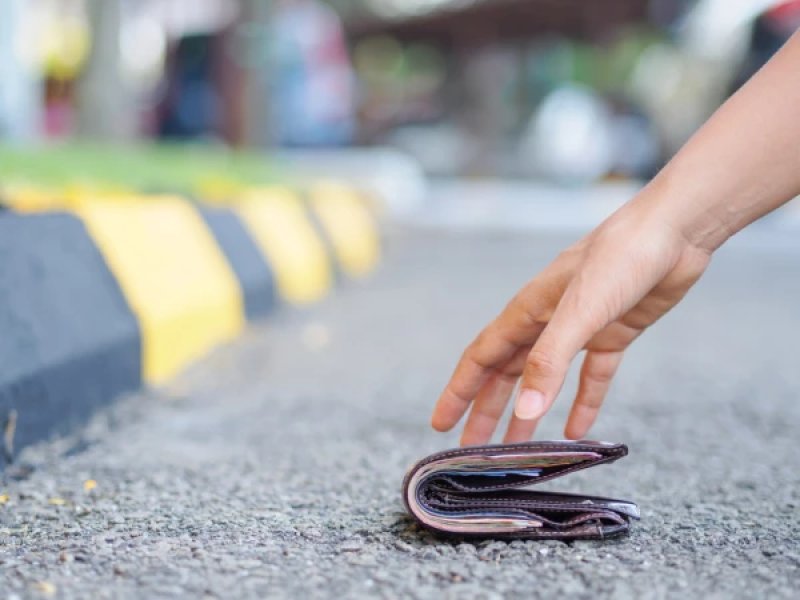
Researchers examined how employees of various institutions handle found wallets, and the results were unexpected. The BBC Science Focus magazine published a ranking of the most honest countries in the world, based on the results of an international experiment involving 40 countries. For the study, scientists handed over 17,303 supposedly lost wallets to employees of banks, hotels, post offices, police stations, museums, theaters, and other institutions in 355 cities around the world. The assistants did not leave the wallets on the street. They entered the institution, informed the employee that they found an item nearby, but were in a hurry and could not search for the owner themselves, after which they left the find. Inside each wallet were business cards with the name and email of the presumed owner, a shopping list, and a key. Some wallets were empty, some contained an amount equivalent to about $13.50, and others about $94. ### Top 10 Countries with the Highest Honesty Levels Switzerland Norway Netherlands Denmark Sweden Poland Czech Republic New Zealand Germany France ### Top 10 Countries with the Lowest Return Rates Turkey China Morocco Peru Kazakhstan Kenya Malaysia United Arab Emirates Indonesia Ghana The USA and the UK ranked only in the middle of the list, taking the 21st and 22nd places, respectively. In these countries, wallets were returned to owners in 52% and 50% of cases, respectively. One of the most surprising findings of the study was that the presence of money increased the likelihood of the find being returned. In 38 out of 40 countries, wallets with cash were returned more often than empty ones. The only exceptions were Mexico and Peru. An additional experiment in Poland, the USA, and the UK showed the same pattern: the more money found inside, the higher the likelihood that the employee would contact the owner. If empty wallets were reported in 46% of cases, this figure rose to 61% for small amounts and to 72% for larger sums. Researchers also found that in more than 98% of returned wallets, the money remained untouched. The authors of the study believe that the higher the amount in the wallet, the more people realize the damage the owner will incur in case of loss, and the harder it is to justify the desire to keep the find for themselves. The results of the experiment showed that in many countries, the sense of responsibility proves stronger than the temptation to appropriate someone else's money.
