

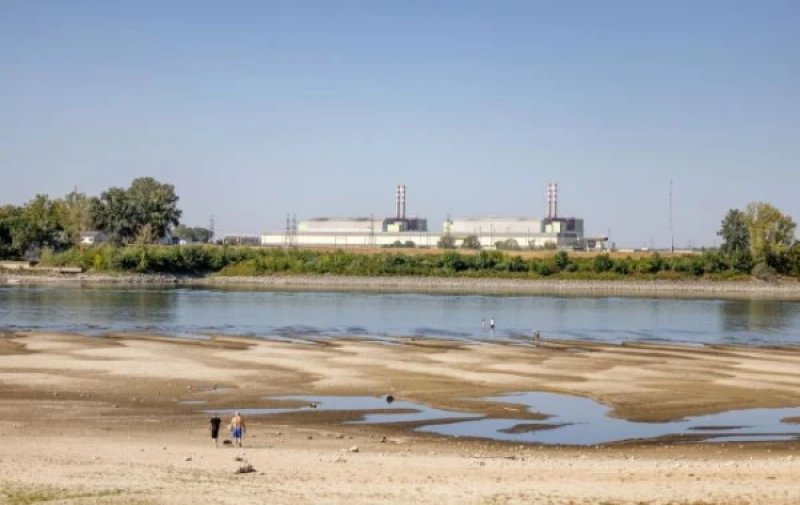
According to Reuters, the decision was made against the backdrop of a severe drought that has led to historically low water levels in one of Europe's largest rivers. The situation is particularly critical for the Paks Nuclear Power Plant, which uses water from the Danube to cool its equipment. Due to the river's shallow conditions, the plant is currently operating at about a quarter of its capacity. Forecasts indicate that by early Monday morning, the water level may drop to a critical point. In this case, Hungary will have to shut down one of the two turbines that are still operational. As a long-term solution, authorities plan to construct a special underwater threshold on the bed of the Danube, which will allow for the regulation of flow and maintain the necessary water level near the plant. However, the construction of this facility will take several weeks. Therefore, until the construction is completed, authorities have decided to use two barges, each about 80 meters long. They will be sunk near the nuclear power plant, hoping to temporarily alter the water flow and raise its level in the area of the plant's intake. The problem of the Danube's low water levels has affected not only Hungary. In neighboring Romania, the last operational nuclear reactor had to be shut down due to the low water level in the river. The prolonged drought is becoming a serious challenge for the region's nuclear energy sector. The situation is forcing Hungary and Romania to seek ways to adapt their nuclear power plants to periods of extreme heat and critically low water levels in the Danube.
