

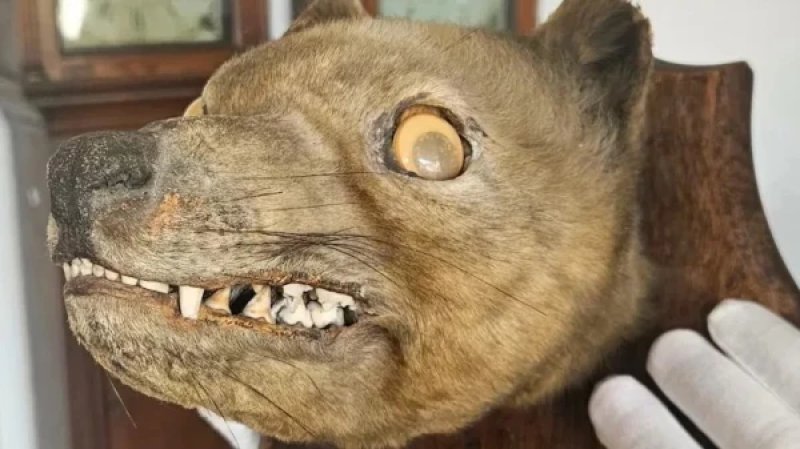
As [reported](https://nos.nl/artikel/2626962-veilingvos-blijkt-heilige-graal-der-opgezette-dieren-de-uitgestorven-tasmaanse-tijger) by NOS, British collector James Cranfield acquired the find at auction for £60,000 — about €70,000. Initially, the lot was valued at only £40, but once it became clear how rare the specimen could be, a real bidding war ensued. The previous owner obtained the find for significantly less. He bought the head at an antique market for about £50 — around €58. According to the auctioneer, the man purchased it solely because he liked the funny plastic movable eyes attached to the taxidermy. It was these eyes that likely contributed to the long-held belief that the head was that of a fox. Cranfield, a professional collector and owner of a rarity shop east of London, doubted the lot's description when he closely examined the animal's teeth. After that, he spent several days studying the anatomical features and comparing the find with known specimens. The decisive clue was the number of upper incisors. As Cranfield explained, foxes and dogs have six upper incisors between their canines, while the Tasmanian tiger, which is a marsupial, has eight. "There is no other animal of comparable size and appearance that has this feature," noted the collector. During the auction, it became clear that the rare specimen had also attracted another dealer. An active bidding war began among the buyers, resulting in the lot's price rising to £60,000. "I am not a rich man, and this is an overwhelming amount, but this is the Holy Grail. It is already being said that it is priceless," Cranfield said. If the authenticity of the find is confirmed, it could indeed turn out to be exceptionally rare. According to the collector, only one other separately preserved taxidermy head of a Tasmanian tiger is known.  The Tasmanian tiger, or thylacine, despite its name, was neither a tiger nor a wolf. It was a large carnivorous marsupial that resembled a dog but had distinctive dark stripes on its back and tail. The last known Tasmanian tiger died in a zoo in Tasmania in 1936. In 2022, the remains of this animal, which had long been considered lost, were discovered in a cabinet at one of the museums in Tasmania, Australia. Cranfield now plans to scan the find to definitively confirm its origin. If the examination proves that he indeed has the head of a thylacine, the collector is willing to lend it to museums and research institutions. Cranfield hopes that this unique find will not remain solely part of a private collection. According to him, such a rare specimen deserves to be studied by scientists and seen by museum visitors.
